
Colorado Fall Colors Photography Workshop in the San Juan Mountains
This Colorado fall colors photography workshop is based in the San Juan Mountains during peak autumn color in late September. The region is known for expansive aspen forests, high alpine basins, and rugged peaks that make it one of the most visually rich fall landscapes in North America. We photograph these landscapes at sunrise and sunset, working in a small group where instruction happens in the field as light, weather, and conditions evolve.
Workshop overview
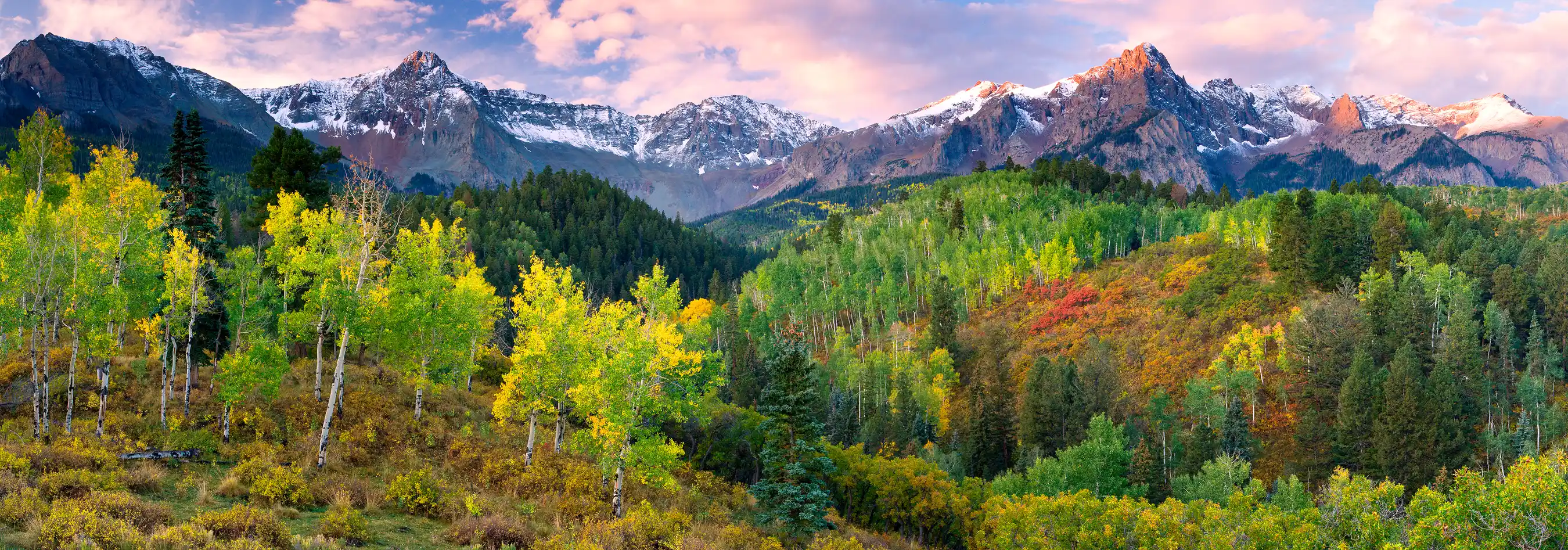
Workshop video
Filmed during previous Colorado fall workshops, the video shows both wide mountain scenes and smaller aspen compositions, along with behind-the-scenes moments in the field.
About the Colorado fall photography workshop
Colorado rarely fails to leave an impression on the beholder, and this is especially true in autumn, when hues of yellow, orange, and red play across the rugged terrain. Add deep blue skies and the possibility of snow on the high peaks, and you have the ingredients that draw many landscape photographers to the San Juan Mountains.
Cool, crisp mornings, the scent of fall in the air, and elk bugling through the valleys complete the experience, creating one of the most compelling times of year to photograph southwest Colorado.
That visual richness is part of what makes fall in Colorado's Mountains so rewarding, but it can also be overwhelming. Whether working along Dallas Divide with Mount Sneffels rising above the valley, in the aspen forests near Owl Creek Pass, or along the high ridgelines near Red Mountain Pass, color, scale, and changing weather often compete for attention. Strong photographs come from deciding what to include, what to leave out, and how to give the scene balance. During this workshop we make these decisions in the field, using light, composition, and timing to bring clarity to complex scenes. Because aspen forests at elevation can change quickly depending on temperature and wind, location choices are made daily based on where color and conditions are strongest.
Andy Cook is present throughout the workshop, not to make his own images, but to help participants make stronger photographs. Some want frequent feedback and discussion as they work, while others prefer space to explore and check in when questions arise. Both approaches are supported. This workshop is well suited to photographers who want time to work scenes carefully rather than rush from overlook to overlook. Some participants arrive looking to strengthen their foundation by gaining confidence with exposure, camera settings, and working deliberately in changing light, while others come to refine composition and decision-making in complex autumn scenes. Instruction is adapted to where you are, whether you are building skills or sharpening them. You can read more about how instruction works across all workshops on the How We Teach page.
Workshop highlights
Landscape variety
The San Juan Mountains offer wide valley views, layered peaks, and extensive aspen forests, giving us a range of locations from expansive mountain scenes to tighter compositions in the trees. Along stretches of Last Dollar Road and in open valleys where Wilson Peak anchors the horizon, we work both broad landscapes and quieter details in the aspens. This variety presents different compositional and exposure challenges, from managing busy foregrounds in aspen stands to simplifying distant ridgelines in changing light.
Sunrise and sunset photography
We photograph sunrise and sunset, along with select locations that work well in afternoon light. Throughout the week, you'll evaluate changing conditions, choose foregrounds, and adjust compositions as light and weather evolve.
Capture and post-processing skills
We work through both capture and finishing, focusing on choices made in the field and how they carry through later in post-processing. The emphasis is on creating files that give you flexibility when editing images.
Workshop itinerary and schedule
Lodging
Instructor lodging:Chipeta Lodge
304 S. Lena St, Ridgway, CO 81432
970-626-3737
Alternate lodging: Participants may also stay in nearby Ouray, Colorado, which offers a variety of hotels, inns, and rental options approximately 10–15 minutes from Ridgway.
Daily outline
-
Day 1 — Wednesday, September 29, 2027
4:30 PM · Welcome & introduction: Join us in the hotel breakfast area for an overview of the workshop, and meet fellow photographers.
5:30 PM · Location preview & practice: Explore an upcoming sunrise location, consider compositions, and check camera settings before the morning shoot.
-
Days 2–4 — Thursday–Saturday, September 30–October 2, 2027
Photography sessions: We'll photograph a mix of iconic and lesser-known locations, focusing on vibrant fall foliage, scenic landscapes, and intimate natural details.
Final sunset session: The workshop concludes with a sunset shoot on Saturday, October 2, 2027.
Optional extended stay: Peak autumn color can extend beyond the workshop dates. Participants may wish to stay longer to continue photographing Colorado's fall landscapes.
What to expect
A typical day
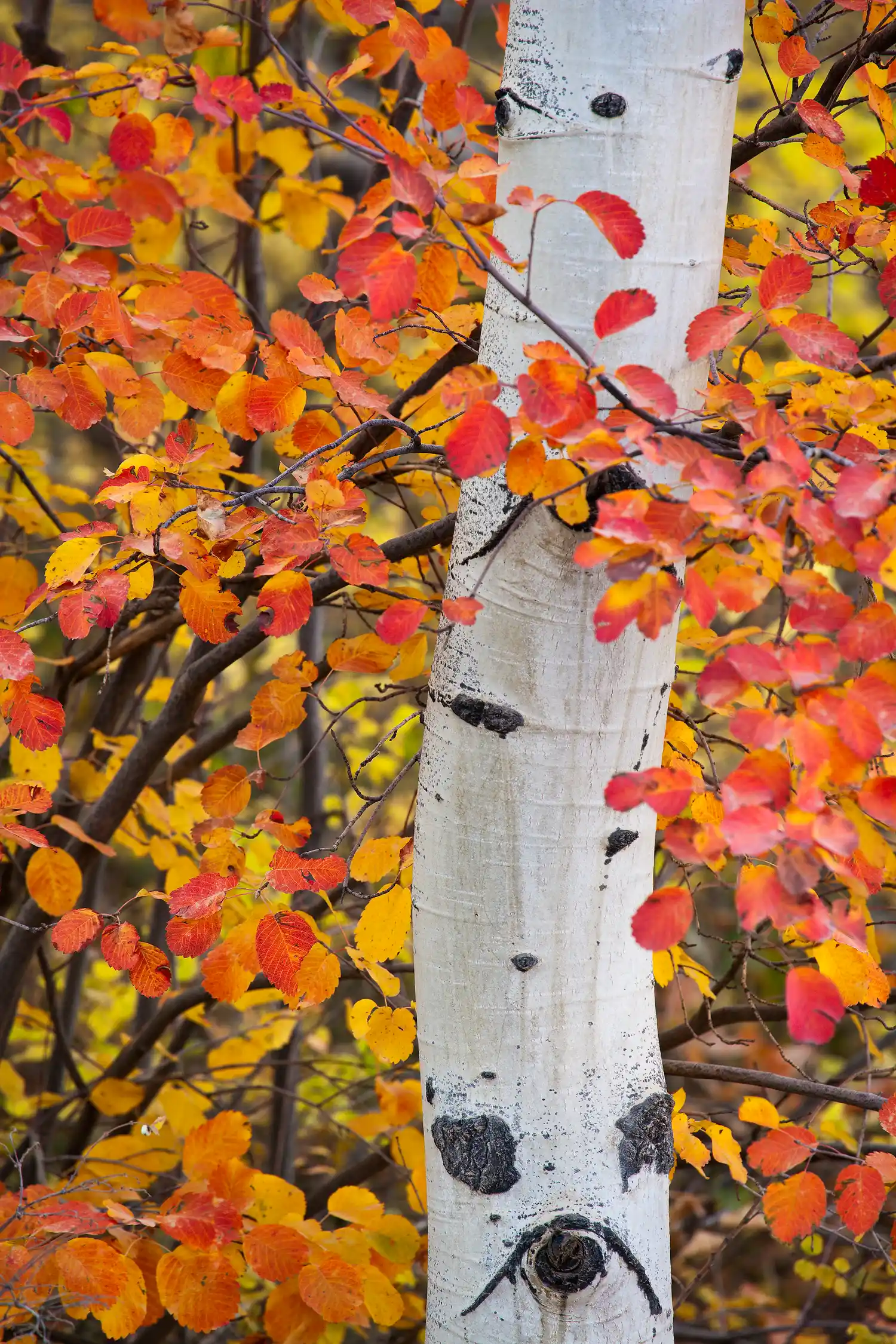
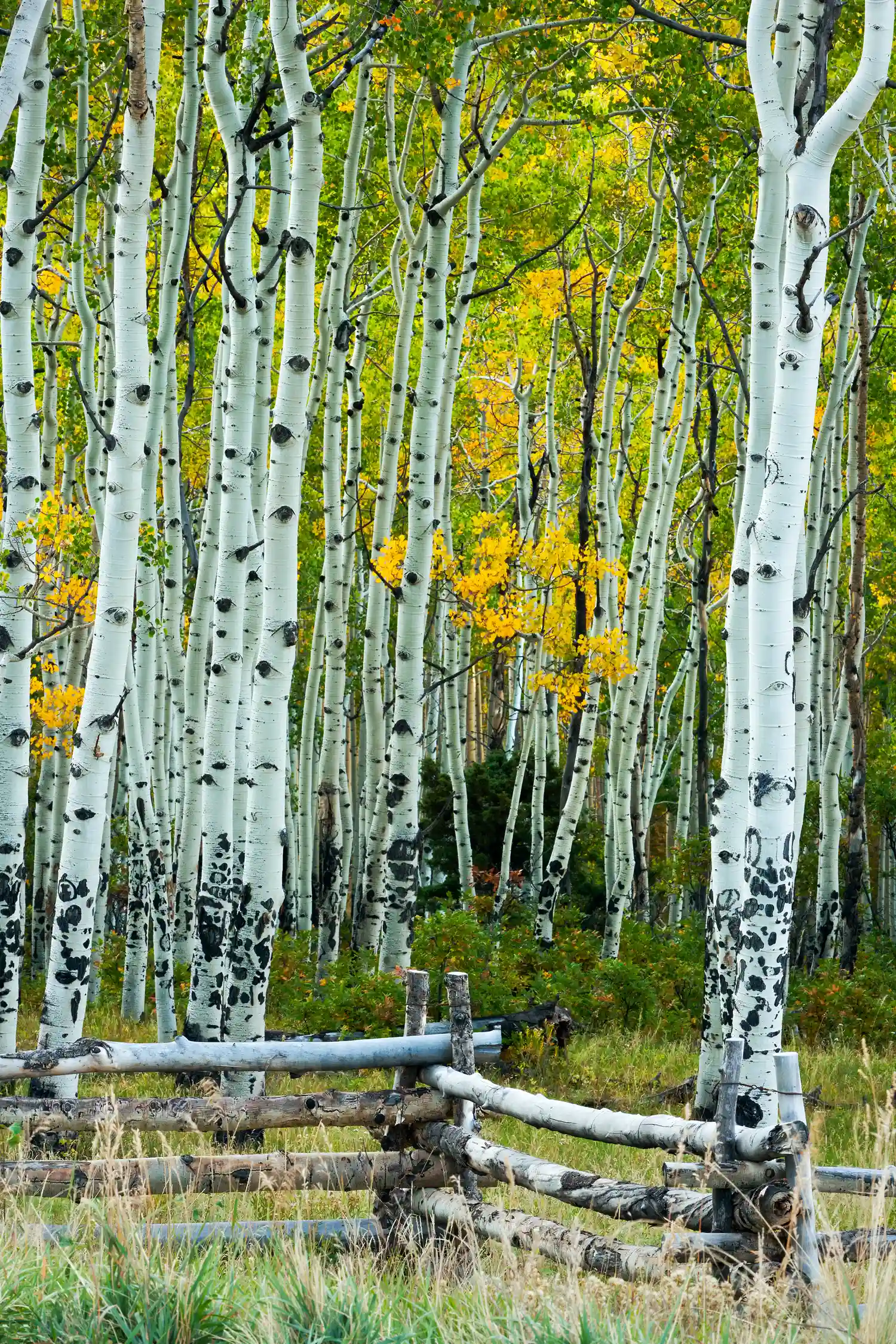
- Morning: Each morning begins before sunrise. We arrive early to work through first light and stay long enough to explore multiple approaches, often by changing position or focal length, with time in the aspens when conditions are right. On some mornings, we may add a second nearby stop.
- Midday: On select days, we gather for image review and post-processing sessions. These are discussion-driven: what worked, what didn't, and how to improve your files. If you bring a laptop with Photoshop installed, you can follow along and ask questions using your own images.
- Evening: We head back into the field for afternoon light and sunset, with the schedule remaining flexible in response to weather. Several evenings include group dinners at local restaurants, with one evening left open for individual plans.

Registration
Registration details are available on the next page where you'll find secure PayPal buttons. You can check out as a guest using your credit or debit card—no PayPal account required.

Workshop details
- Experience level
- Beginner to advanced — this workshop is designed for photographers at all stages. Whether you're building a foundation or refining your approach, instruction is adapted to your experience and goals.
- Group size
- Small group (target of 8 participants) to allow for individualized instruction.
- Effort
- Easy to moderate — most locations are accessed from roads or short walks. One location involves a 300-yard uphill walk on a 4WD road, and another requires standing on a slope with loose soil. These may be challenging for those with balance or footing concerns. Sturdy footwear is recommended.
- Conditions and elevation
- Fall conditions in Colorado can vary widely. Mornings are often cold, especially at higher elevations, while afternoons can be much warmer. Locations range from approximately 7,000 to 11,000 feet, so staying hydrated and pacing yourself is important throughout the week.

Getting to the workshop
Air travel
Most participants flying to the Colorado Fall Photography Workshop use Grand Junction Regional Airport (GJT) or Montrose Regional Airport (MTJ).
Drive time from the airport:
Grand Junction to Ridgway, CO — approximately 2 hours
Montrose to Ridgway, CO — approximately 45 minutes
Driving and carpooling
Vehicle requirements: Roads to workshop locations are a mix of paved highways and well-maintained dirt roads. In most conditions, a standard vehicle is sufficient. In wetter years, some dirt roads can become muddy or rough, and a higher-clearance vehicle such as an SUV is recommended.
During the workshop we encourage participants to carpool to reduce impact and simplify logistics while traveling between locations.
Recommended gear
Lenses
A lens range of roughly 24mm to 400mm (full-frame equivalent) is recommended. Wide-angle lenses work well for expansive landscapes and foregrounds, while longer focal lengths are useful for isolating details, compressing distance, and working with layered mountain scenes and fall color.
Polarizing filter
A polarizing filter can be very helpful during fall conditions. It reduces glare on wet surfaces, deepens sky tones, and increases color saturation — especially in aspen groves, foliage, and reflective terrain. As with any filter, results vary by scene, so we recommend reviewing images in the field and adjusting as needed.
Seasonal note: Peak fall color in the San Juan Mountains typically occurs in the last week of September through the first few days of October. Weather can cause leaves to change or drop earlier than expected, and exact timing varies year to year.

Workshop community
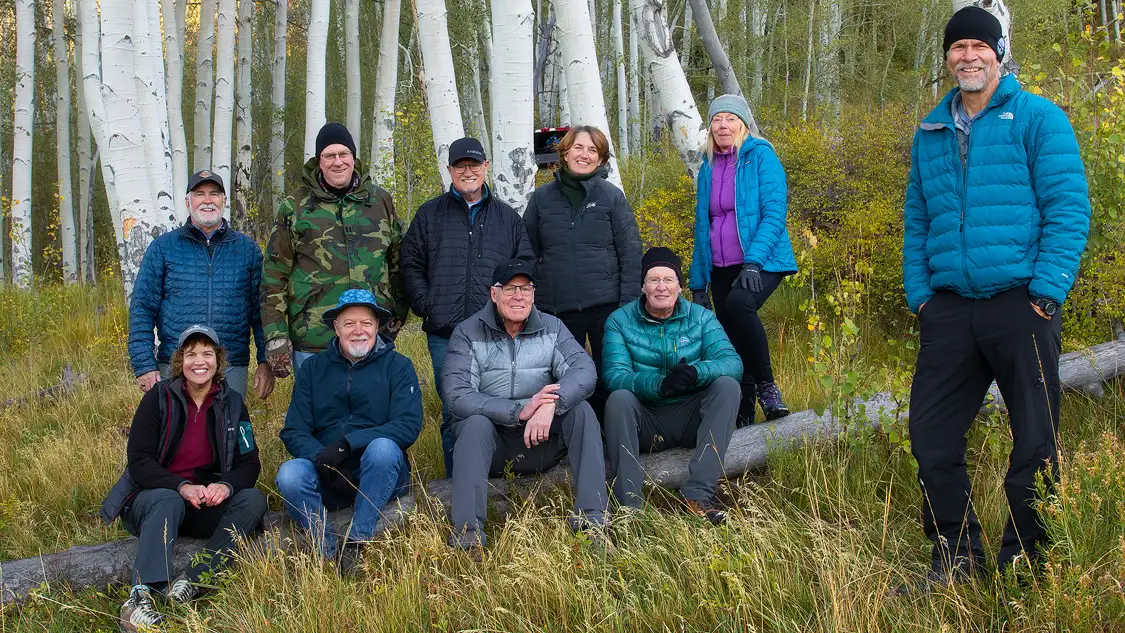
See photographs created by participants during past Colorado Autumn workshops.
FAQ
- Is this workshop suitable for beginners?
-
Yes. The workshop works well for a wide range of experience levels. If you're newer to landscape photography, the focus is on building solid fundamentals—camera operation, focus, exposure, and working with changing mountain light in the field. If you're more experienced, the emphasis shifts toward refining compositions and solving more nuanced problems. Instruction adjusts to where you are, not to a preset curriculum.
- How much instruction is there versus time to work on my own?
-
Instruction is available throughout the day, but it isn't constant or forced. Some participants prefer frequent feedback; others like time to work independently and check in when questions come up. Both approaches fit. Andy stays engaged in the field and during review sessions, offering guidance when it's useful to you.
- What kind of locations will we photograph?
-
We photograph a variety of locations in the San Juan Mountains, from open mountain vistas near Dallas Divide and Mount Sneffels to aspen forests along Owl Creek Pass and stretches of Last Dollar Road. Expect both expansive valley views and quieter settings where smaller compositions emerge in the trees. Location choices are made daily based on light, weather, and where fall color is strongest.
- How physically demanding is the workshop?
-
The effort level is generally easy. Most locations are reached from roads or short walks. Terrain can be uneven in places. There are no long or strenuous hikes, but sturdy footwear is recommended. If you have specific mobility concerns, it's best to ask in advance.
- What should I expect in terms of weather and fall color?
-
Fall conditions in the San Juan Mountains can change quickly. Mornings are often cold, especially at higher elevations, and early snow is possible on the peaks. Peak fall color typically occurs in late September to early October, but timing varies from year to year depending on temperature and moisture. We adjust locations and elevations throughout the week to work where color and conditions are most favorable.
- Do I need to bring a laptop for post-processing sessions?
-
A laptop is recommended but not required. On select days, we hold image review and post-processing sessions, and having your own laptop with Photoshop allows you to follow along using your images. If you prefer to focus only on fieldwork, that's fine.
Further Study
For photographers interested in refining post-processing techniques related to this workshop, the following tutorials may be helpful: