
Caddo Lake Fall Photography Workshop
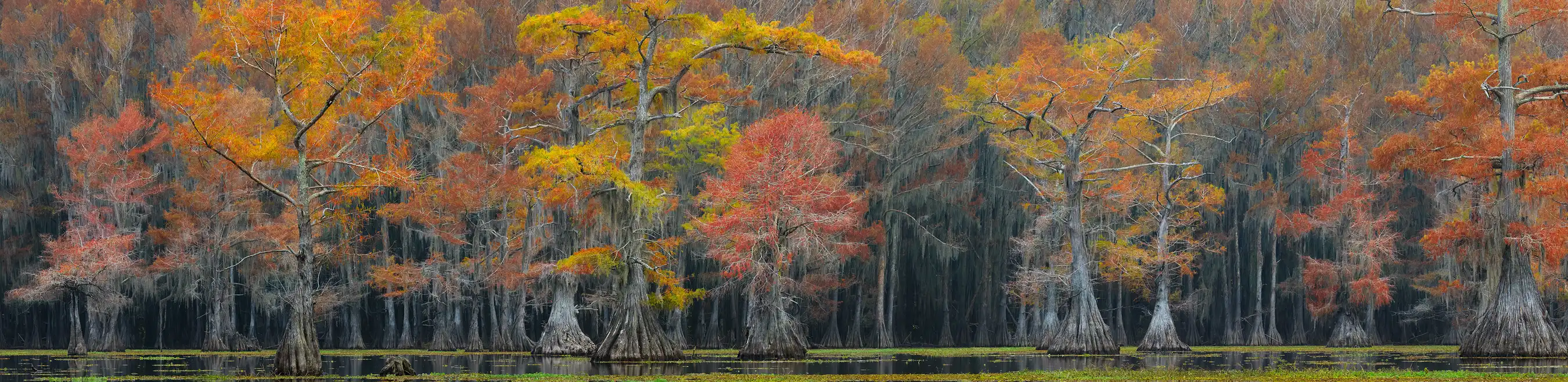
This Caddo Lake fall photography workshop is based in Jefferson, Texas during peak autumn color. The lake's cypress swamps create a quiet landscape of sculptural trees, still water, and layered reflections. We photograph these scenes in a small group, working slowly from shore and kayak as light and water conditions evolve.
Workshop overview
Workshop video
This video shows behind-the-scenes field sessions at Mill Pond and during on-water kayak sessions, along with images captured as light and reflections evolved.
About the Caddo Lake fall photography workshop
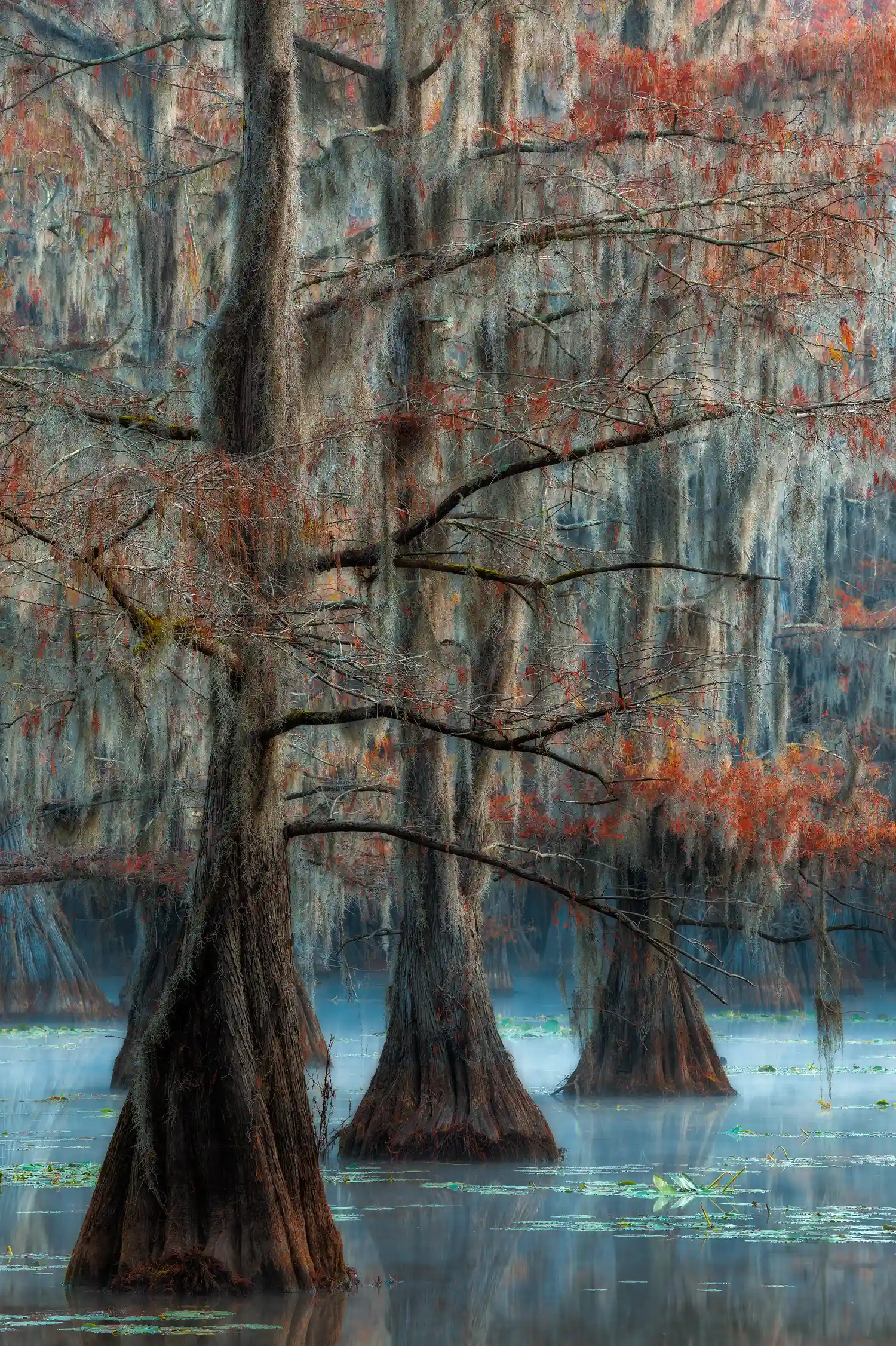
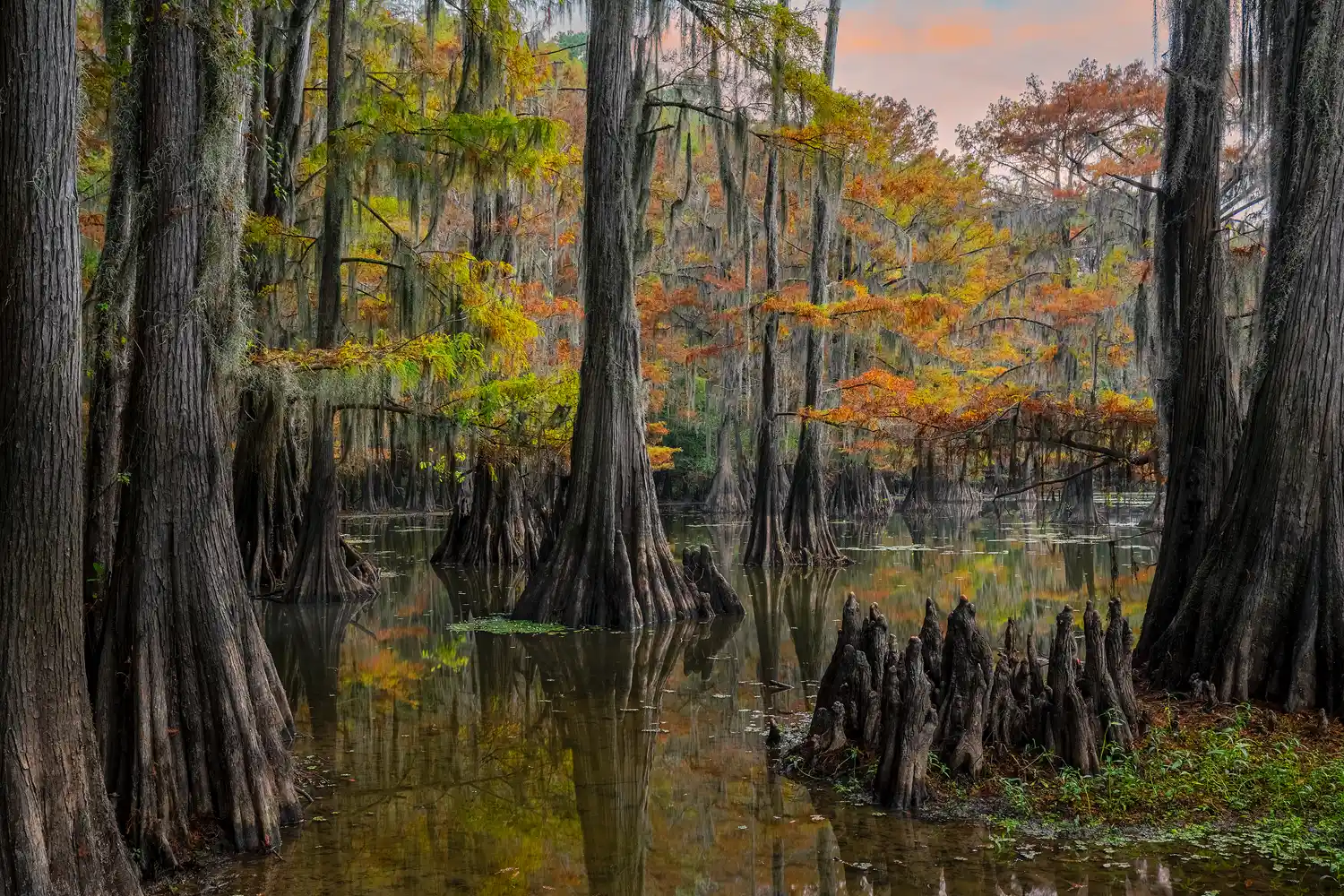
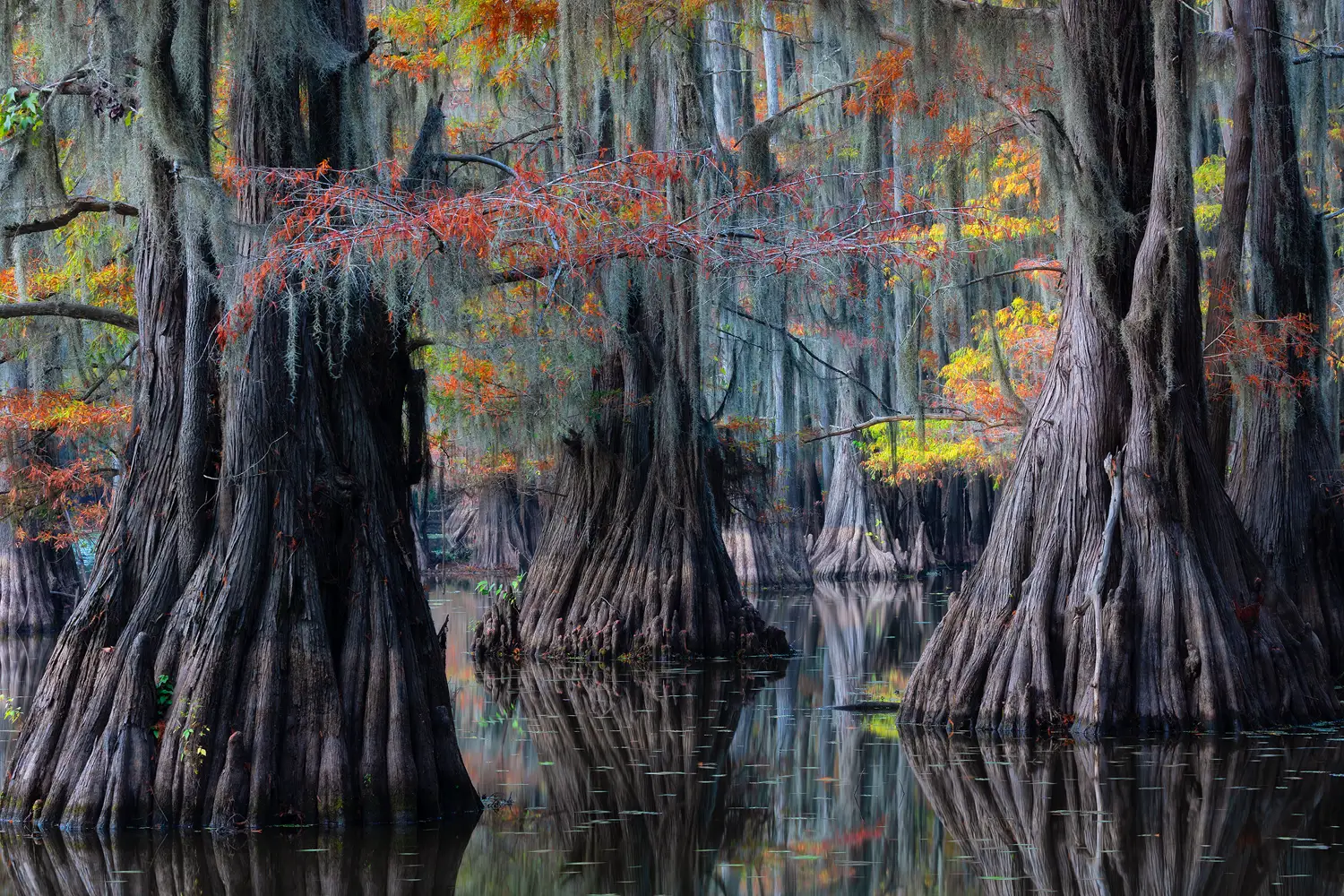
The Caddo Lake region of East Texas is unlike any other photographic environment in the United States. Cypress trunks rise directly from dark water, Spanish moss hangs low, and reflections often become part of the subject itself. Sound carries differently here. Movement is slow. Maze-like waterways and sculptural trees create a quiet, layered landscape well suited to thoughtful work. Photographing here requires careful framing and attention to small details.
Images made in cypress swamps often reveal weaknesses during review. Scenes that feel balanced from a kayak can unravel on a larger screen when small overlaps or background distractions become obvious. Small changes in position, focal length, or timing often determine whether an image holds together.
This workshop is designed for working slowly in that environment, often from a low vantage point just above the water. Rather than covering ground for the sake of seeing new places, we return to a small number of productive locations along Big Cypress Bayou and at sites such as Saw Mill Pond in Caddo Lake State Park. That repeated access allows you to apply what you have learned in review, revisit earlier compositions, and strengthen your final set of images.
Andy works alongside participants in the field, not to make his own photographs but to help with decisions as conditions unfold. Experience levels vary, and participants come for different reasons. Some want to strengthen compositional discipline and decision-making in a complex environment. Others come for access, timing, and the quiet experience of working from the water. The goal is the same for everyone: to leave with a body of work that reflects what they intended to capture. You can read more about how instruction works across all workshops on the How We Teach page.
Workshop highlights
Photographing from the water
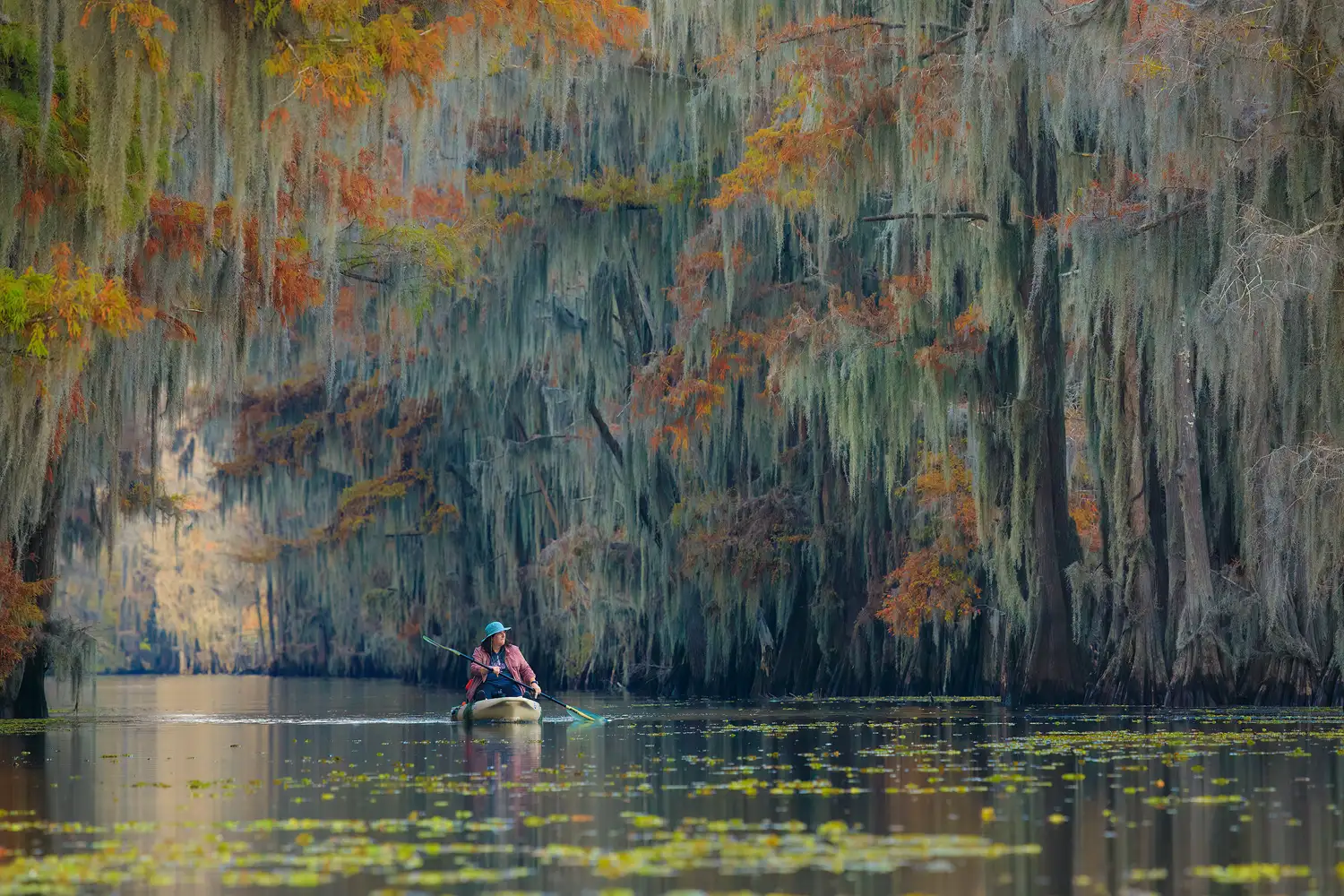
About half of the photography takes place from kayaks, allowing quiet access to narrow channels and hidden corners of Big Cypress Bayou that cannot be reached any other way. Working from the water changes perspective. Small shifts in kayak position can alter alignment, reflections, and background separation in ways that are not possible from shore.
Image review and refinement
Midday and evening review sessions provide time to examine your work and identify what needs adjustment. Because we return to select locations, feedback discussed during review can be applied directly in the field, giving you the opportunity to strengthen earlier compositions.
Historic accommodations in Jefferson, Texas
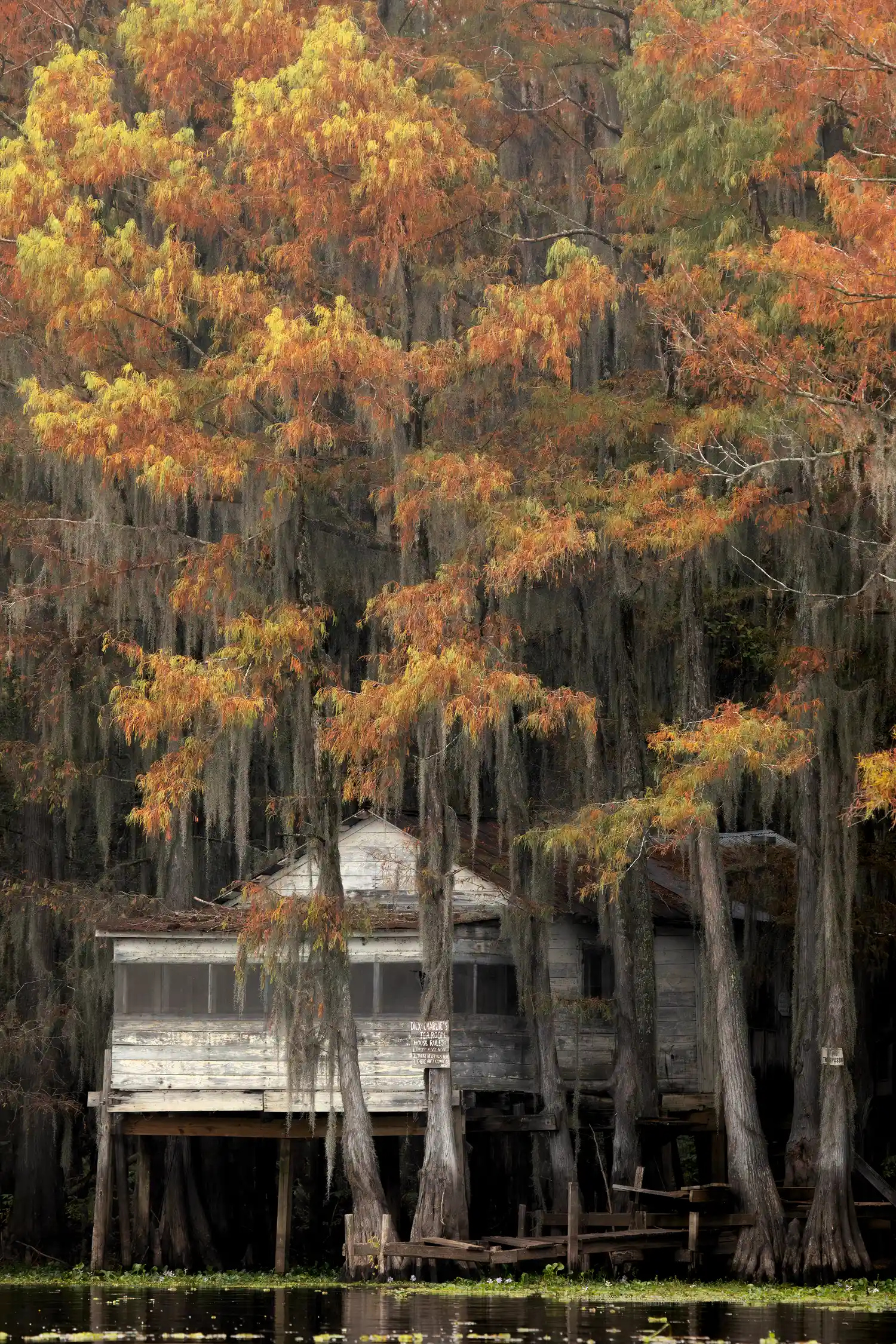
The group stays in Jefferson, Texas, a historic river town known for its architecture and relaxed pace. After long days on the water, it is a comfortable place to review work, share meals, and unwind.
Workshop itinerary and schedule
Lodging
Historic Kahn Hotel123 West Austin Street, Jefferson, TX 75657
Lodging website · 903-601-4471
Daily outline
-
Day 1 (Tuesday, Nov. 3)
- — Check-in at the Historic Kahn Hotel.
- — Welcome meeting and introductions.
- — Depart for the first photography location at Caddo Lake.
-
Days 2–3 (Wednesday–Thursday, Nov. 4–5)
Photography sessions from elevated boardwalks, along the shoreline, and on guided kayaking excursions.
-
Day 4 (Friday, Nov. 6)
Final morning session: workshop concludes after a sunrise shoot. Photography typically wraps between 8:00–9:00 AM. Please avoid scheduling early flights.
Note: We have reserved a block of rooms for the group. Participants should secure one of these rooms by calling the hotel directly and requesting one of the reserved rooms for "Rocky Mountain Photography".
Extended stay: This workshop is designed as a fine-art experience, focusing on a few locations to help you refine your compositions and capture your best images. Consider extending your stay and exploring more.
What to expect
A typical day
- Morning: We start early at sunrise locations to work through civil twilight and early light. After shooting, we return for breakfast.
- Midday: On certain days, we gather for image review and post-processing help. This time is used to ask questions, look closely at what's working, and decide on adjustments with Andy's guidance.
- Evening: After time in the field and sunset work, we have dinner at local restaurants with a relaxed, informal feel. Photography is what brings everyone together, but time spent sharing meals and experiences often becomes one of the more memorable parts of the workshop.
Registration
The 2027 Caddo Lake workshop is currently full, but a spot may open by September 30. If you are ready to attend on short notice, join our intertest list for this workshop.
→ Join the 2027 Caddo Lake Workshop interest list.
Registration details are available on the next page where you'll find secure PayPal buttons. You can check out as a guest using your credit or debit card—no PayPal account required.
Workshop details
- Experience level
- Intermediate to advanced photographers. Beginners are welcome if you're comfortable operating your camera and working independently, especially while photographing from a kayak. On-water sessions prioritize safety and positioning, which limits direct, moment-by-moment instruction.
- Group size
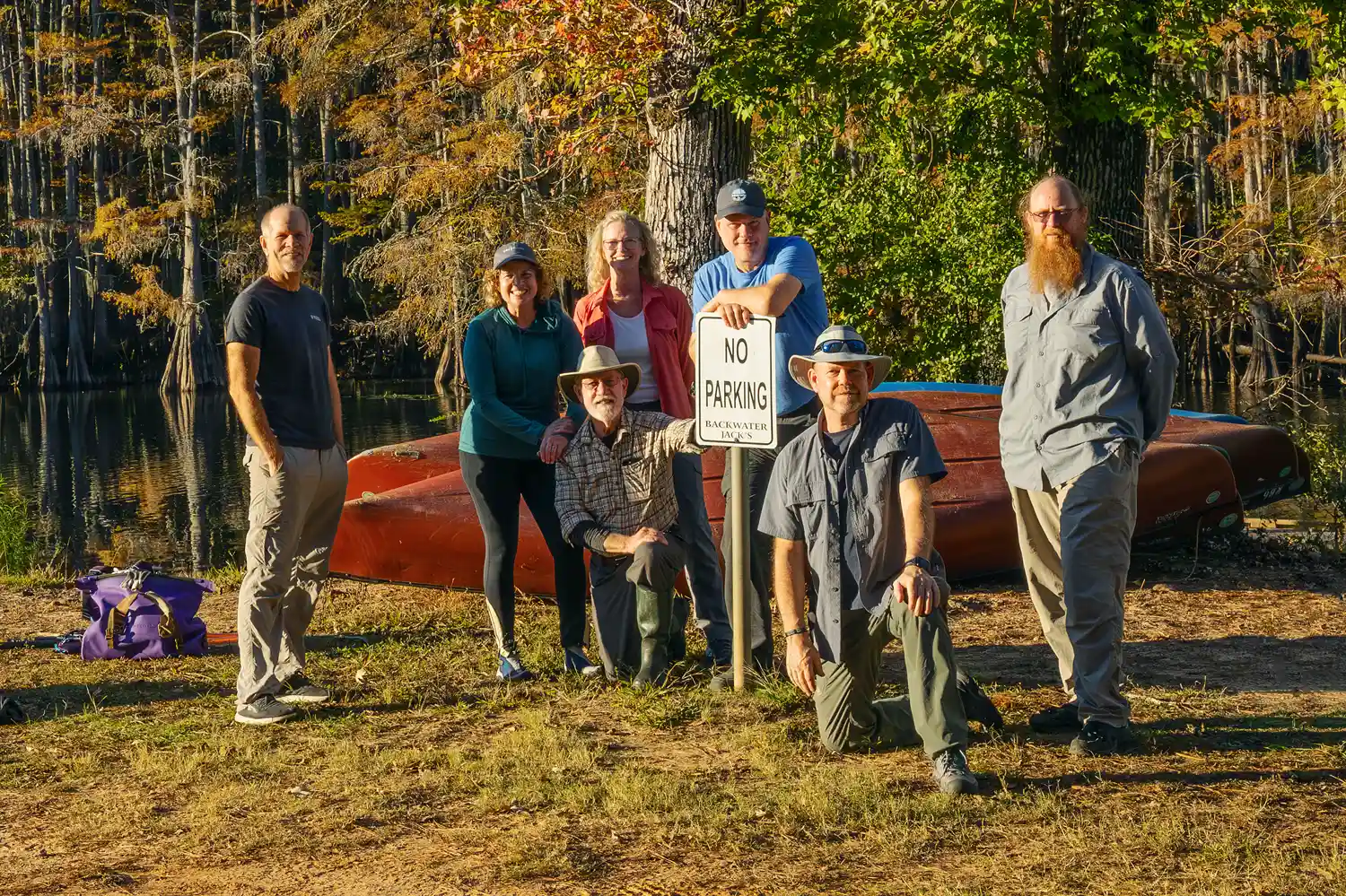
- 7 participants.
- Effort
- Easy to moderate. Shore-based locations are short walks from parking. Kayaking sessions last about 1 to 3 hours. Participants handle their own kayaks, with assistance at launches. You should be comfortable getting in and out of a kayak independently.
- Kayaking
-
Approximately a day and a half of the workshop is spent photographing from kayaks. Paddles typically last one to three hours and move at a measured pace through narrow bayous and open water. Participants handle their own kayaks, with assistance at launches and radios provided for communication.
Working from a kayak allows quiet movement and small positional adjustments that would not be possible from shore or powerboats. The goal is access, not distance or speed.
- Conditions
- Expect cool mornings and warmer afternoons, so layered clothing is recommended. Be prepared for rain.
- Included
- The fee includes kayak rentals and state park entrance fees.
Getting to the workshop
Air travel
The closest airport is Shreveport Regional Airport (SHV) in Louisiana.
Alternatively, you can fly into Dallas/Fort Worth International Airport (DFW).
Drive time from Shreveport to Jefferson: ~1 hr
Drive time from Dallas to Jefferson: ~2 hr 30 min
Driving and carpooling
Most locations are accessed by paved roads, and a standard rental car is sufficient. We typically carpool to reduce the number of vehicles and make logistics easier during the workshop.
Recommended gear
Lenses
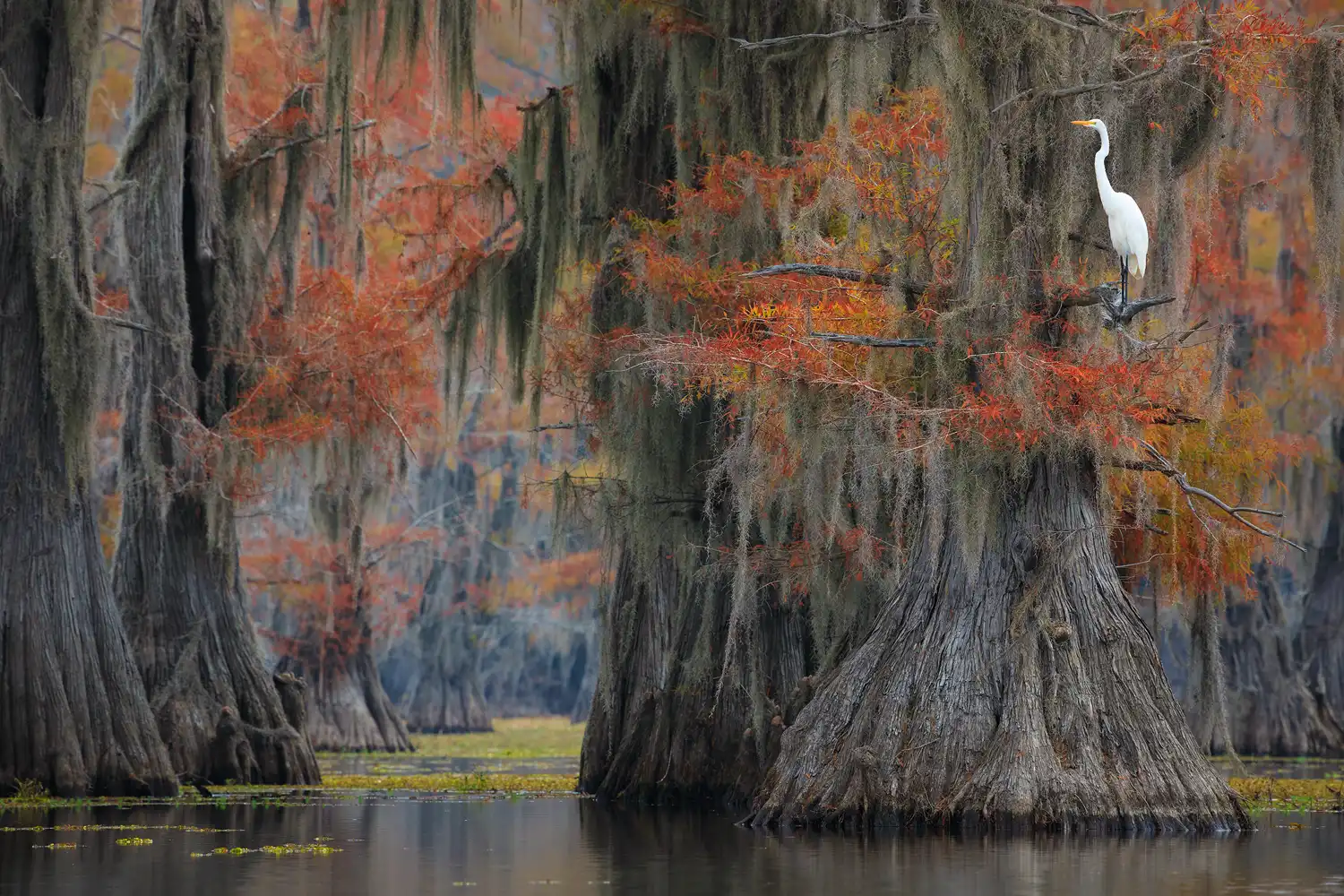
Andy recommends bringing a longer zoom lens—something in the 100–400mm or 70–300mm range (full-frame equivalent). Longer focal lengths are especially useful at Caddo Lake for isolating details.
Wider lenses such as a 16–35mm or 24–70mm can also be useful for broader compositions when conditions allow. If you have the option, bringing a range of lenses gives you flexibility as scenes and working distances change throughout the workshop.
Polarizing filter
A polarizing filter can be useful at Caddo Lake, especially for managing glare on leaves and wet surfaces and bringing out fall color. Like most tools here, it's situational—but worth having available when conditions line up.
Tripod
A solid, full-size tripod is important at Caddo Lake, especially when working near the water's edge where legs may sink into soft ground. Taller tripods give you more flexibility and stability. Small travel tripods generally aren't suitable here and can be difficult to use safely around the water.
Tripod for kayaking
Most photography from kayaks is done handheld. The boat is always moving a little, and working without a tripod makes it easier to respond to small changes in position. In shallow water, some participants may choose to use a tripod near the kayak, but it will get muddy and wet. If you plan to try it, bring a tripod you're comfortable getting dirty.
Tall rubber boots
Knee-high rubber boots are strongly recommended. They keep you dry when launching kayaks and stepping into shallow water.
Flashlight or headlamp
For early mornings and evenings.
Dry bag
A 40–60 liter dry bag helps protect your camera, lenses, and other essentials when entering and exiting the water and while getting situated in the kayak.
Workshop community
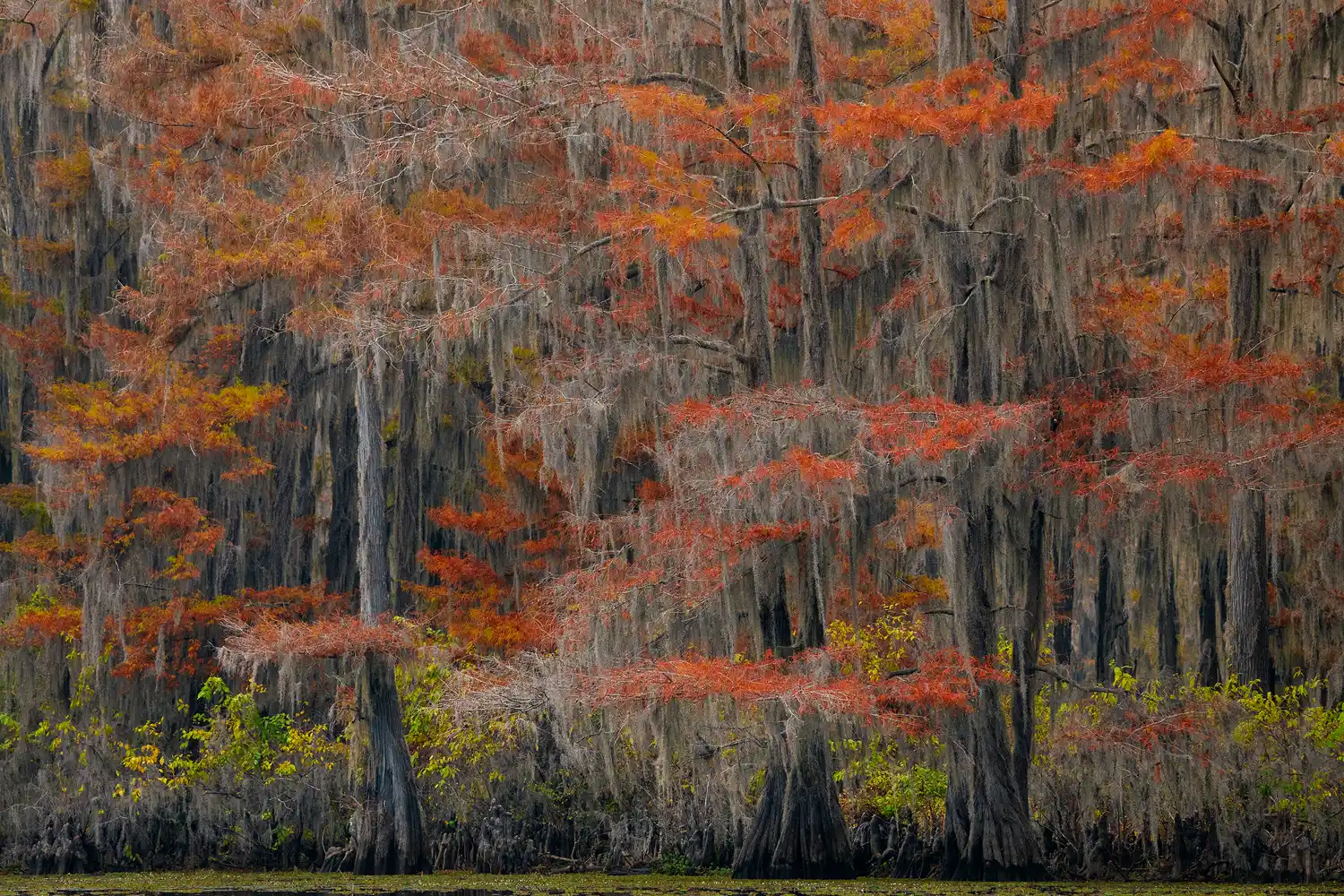
See photographs created by participants during past Caddo Lake workshops.
FAQ
- Is this workshop more about learning or photographing?
-
Both. You will spend real time photographing strong locations, and instruction is available whenever it is useful. Some participants prefer to work independently and check in occasionally. Others like more back-and-forth. Andy's fine with both approaches.
- How fast-paced are the days?
-
The pace is steady, not rushed. We don't bounce from spot to spot trying to “cover” the lake. Instead, we return to a small number of productive areas and work them under different light and conditions. That approach allows time to experiment, make mistakes, and refine your compositions rather than constantly starting over.
- Do I need kayaking experience to participate?
-
Previous kayaking experience helps, but it isn't required. The paddles are relaxed and focused on access rather than distance or speed. You should be comfortable getting in and out of a kayak independently and spending a few hours on the water. Instruction during kayak sessions is more observational and conversational, with more detailed feedback happening before and after.
- How much post-processing instruction is included?
-
Post-processing help is available during scheduled review sessions and as questions come up. Most of the emphasis is on field improvements, refining compositions, correcting issues, and understanding why an image did or didn't come together.
- Is this workshop suitable if I'm still building confidence?
-
Yes, as long as you're comfortable operating your camera and open to working independently at times. The environment rewards careful observation and problem-solving rather than fast reactions. You'll be surrounded by a small group of photographers working through similar challenges, which often helps people settle in more quickly.
Further Study
For photographers interested in refining post-processing techniques related to this workshop, the following tutorials may be helpful: