
Great Smoky Mountains Spring Photography Workshop
This Great Smoky Mountains spring photography workshop is based near Townsend in late April. Spring in the Smokies brings flowing mountain streams, fresh forest greens, and mist that often gathers along valleys and ridgelines after cool overnight temperatures. We photograph these landscapes in a small group, working carefully in the field as weather, water levels, and light evolve.
Workshop overview

About the Smoky Mountains spring photo workshop
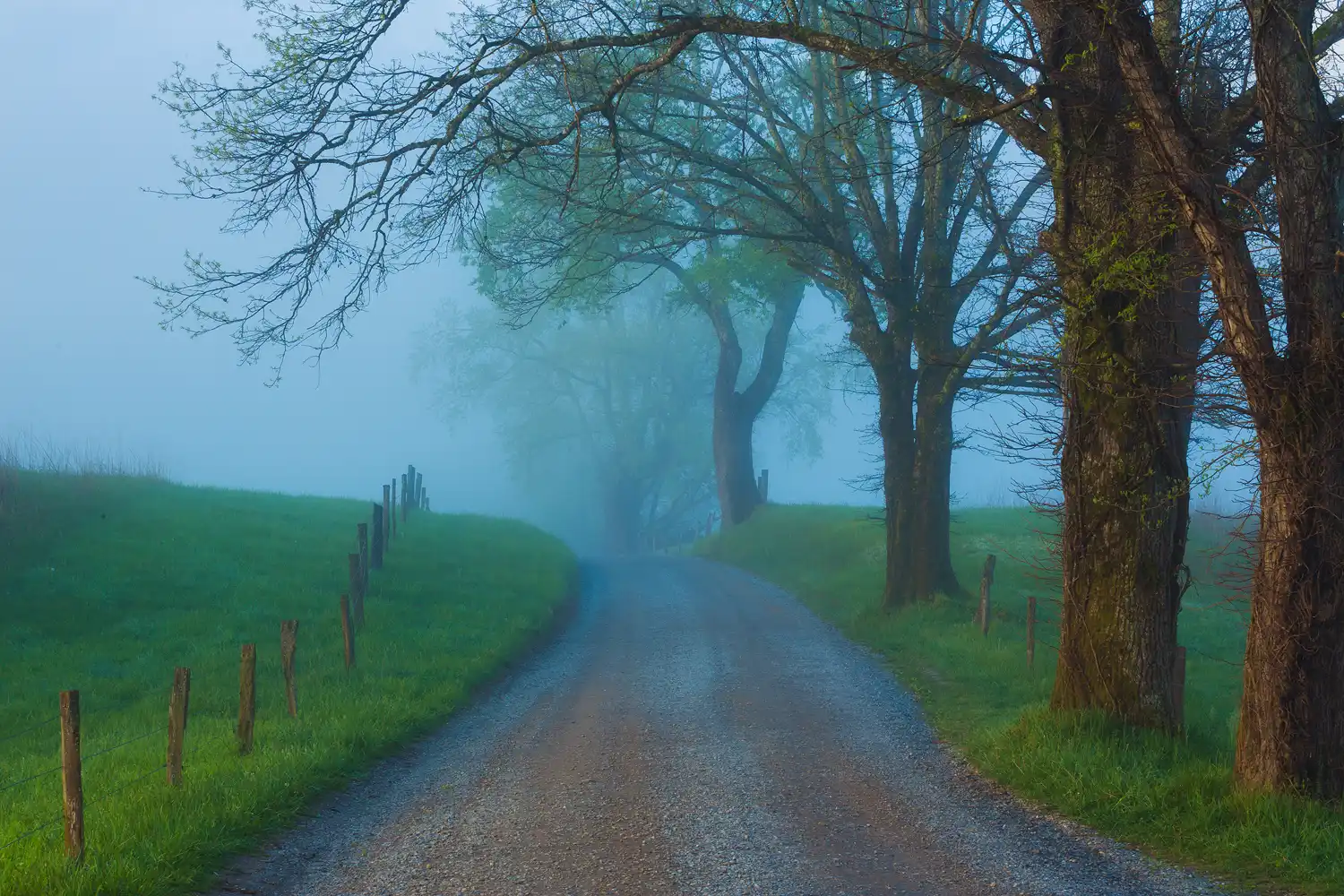
Spring arrives gradually in Great Smoky Mountains National Park. Fresh greens spread through the forest, streams run high with spring runoff, and fog often gathers in valleys and along ridgelines. Across the park's forests and streams, moss-covered rocks, flowing water, and new growth create complex scenes where careful framing and small adjustments in position often make the difference between a photograph that almost works and one that holds together.
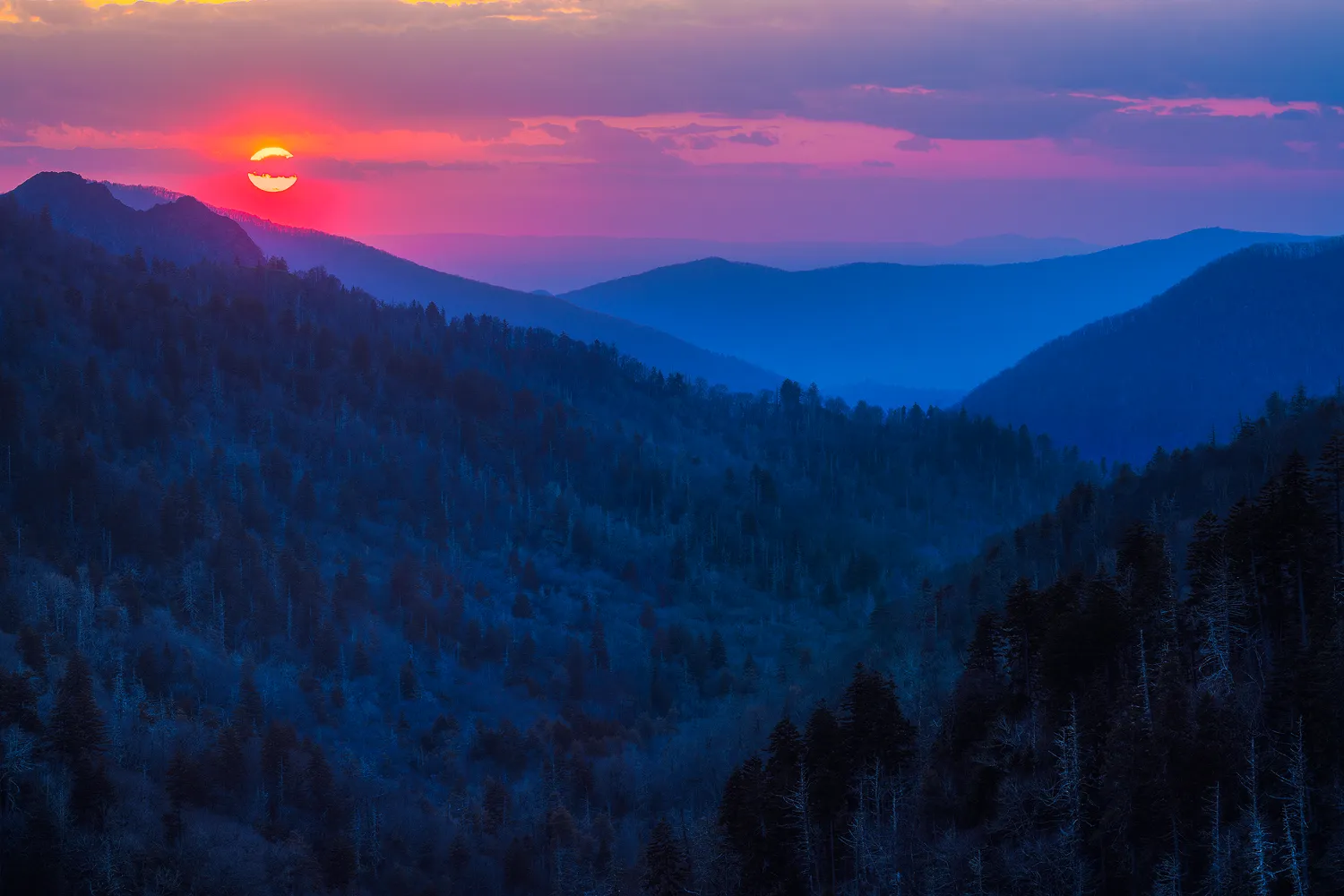
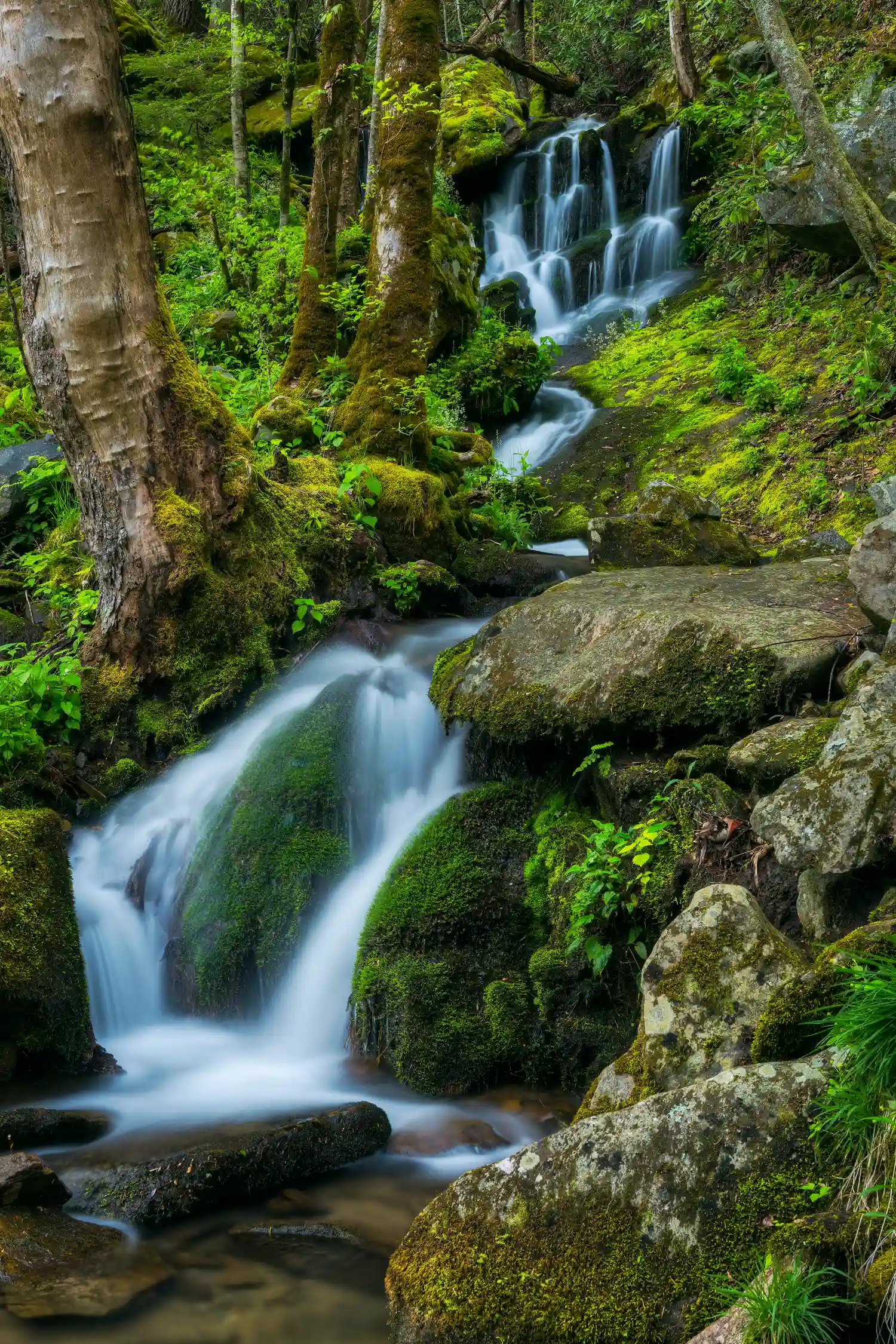
During the workshop we spend extended time in the field, letting weather and changing conditions guide our location choices. Some sessions focus on streams and cascades in places such as the Middle Prong of the Little River near Tremont, Deep Creek, and Big Creek. At other times, when fog settles into the valleys or light begins to build across the mountains, we'll be in places like Morton Overlook, the Foothills Parkway, or the Clingmans Dome area. The pace allows time to work a scene patiently while still experiencing a range of the Smokies' landscapes over the course of the week.
Participants come with a wide range of experience, and instruction happens where it's most useful: at the tripod, during setup, and while reviewing choices that didn't quite work. If you're newer to landscape photography, there's guidance on fundamentals like camera settings, exposure, composition, filters, and working carefully with a tripod. For more experienced photographers, the focus shifts toward refining compositions by simplifying busy scenes and making exposure decisions that preserve dynamic range for easier post-processing. Andy is present throughout the workshop not to make his own images, but to help participants make stronger photographs and step back when help isn't needed. You can read more about how instruction works across all workshops on the How We Teach page.
Workshop highlights
Spring streams and forest renewal
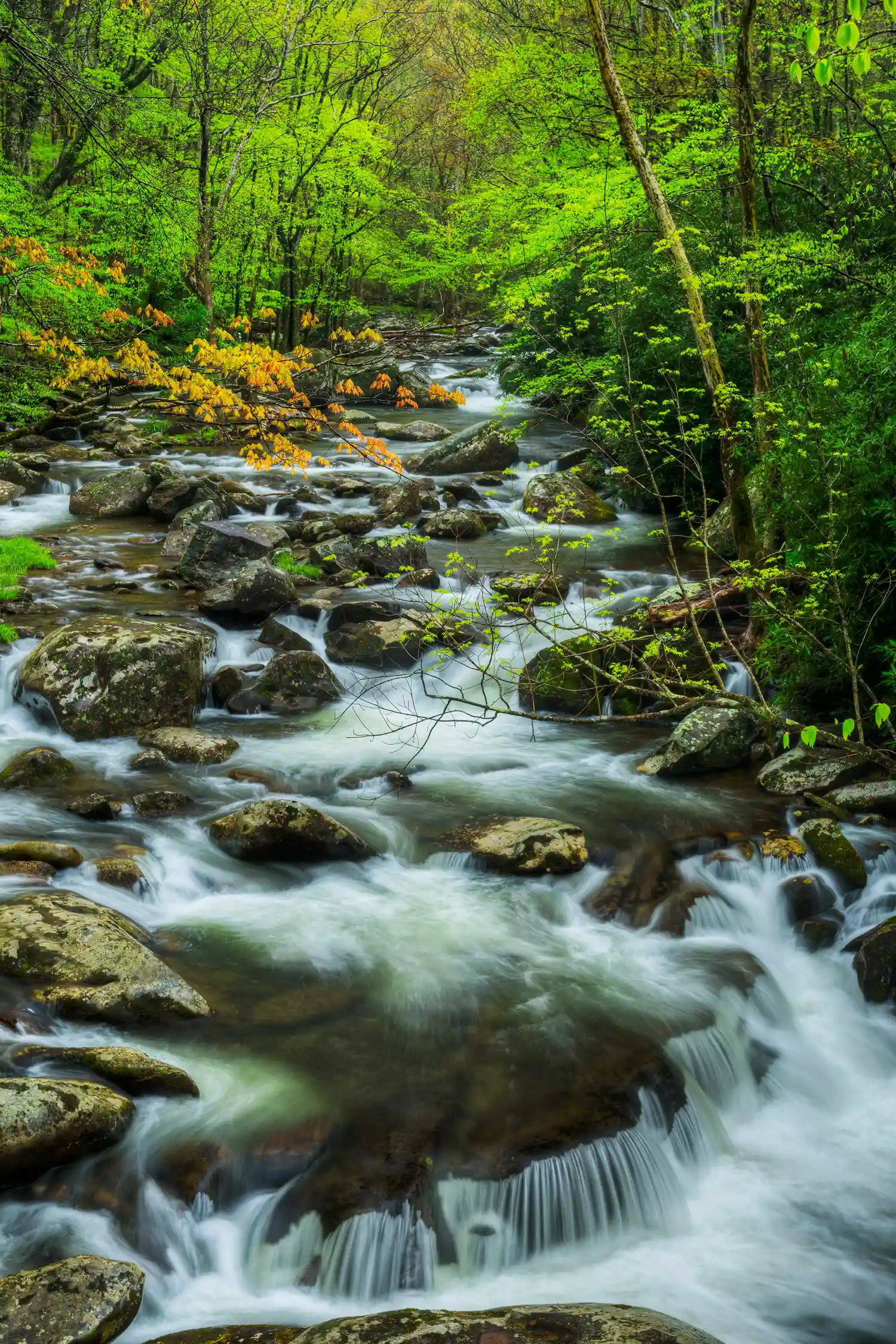
High spring water levels make the Smokies' streams and cascades especially active in late April. Locations such as the Middle Prong of the Little River near Tremont, the Greenbrier area, and Tom Branch Falls in Deep Creek offer flowing water framed by moss-covered rocks and fresh forest growth. Long exposures often work well here, softening the motion of water while the surrounding rocks and forest remain sharp.
Fog, valleys, and mountain overlooks
Morning conditions often take us to overlooks along the Foothills Parkway or near Clingmans Dome. Fog drifting through valleys and along ridgelines can reveal the Smokies' classic layered landscapes, sometimes appearing and disappearing within minutes.
Historic cabins and cultural landscape
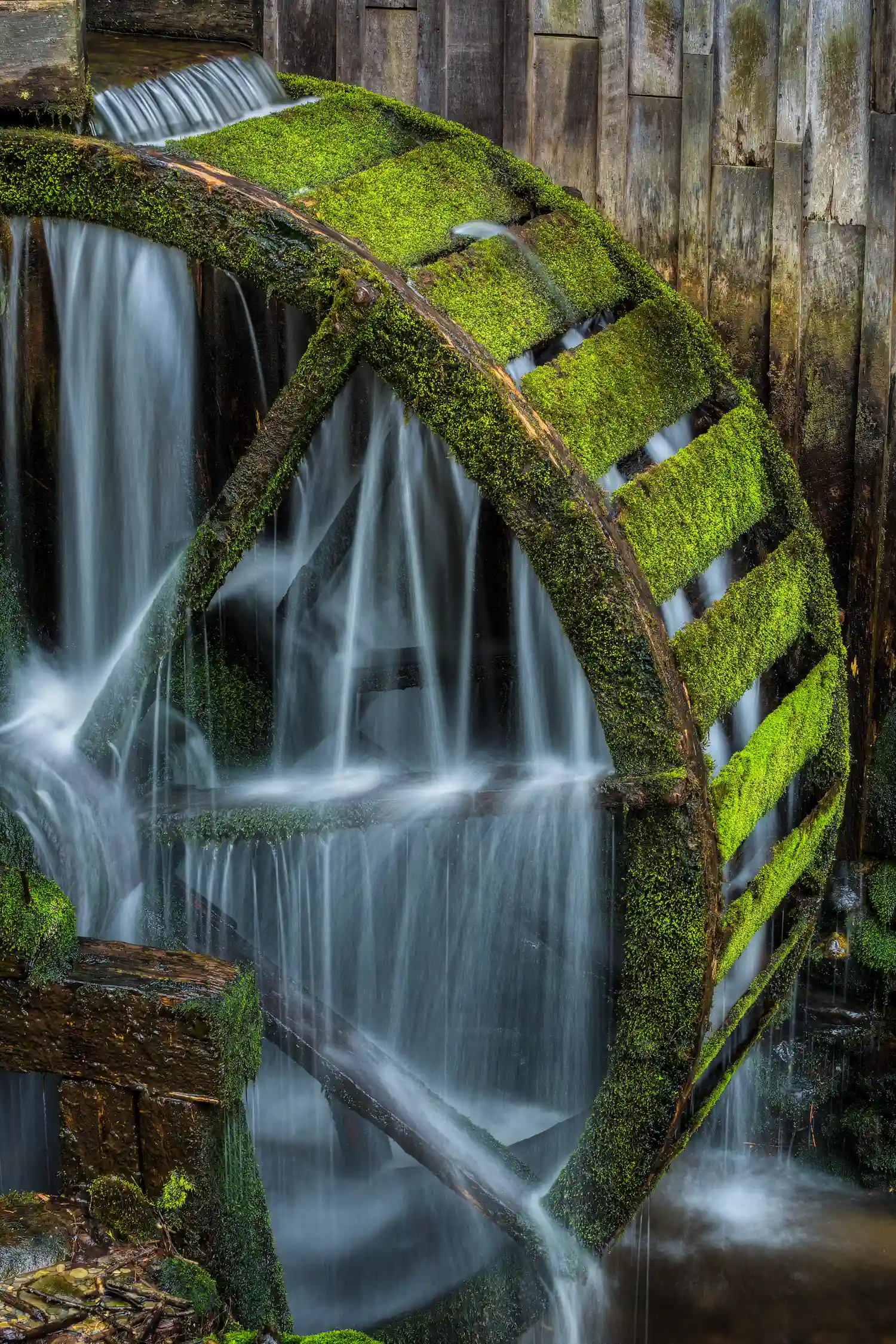
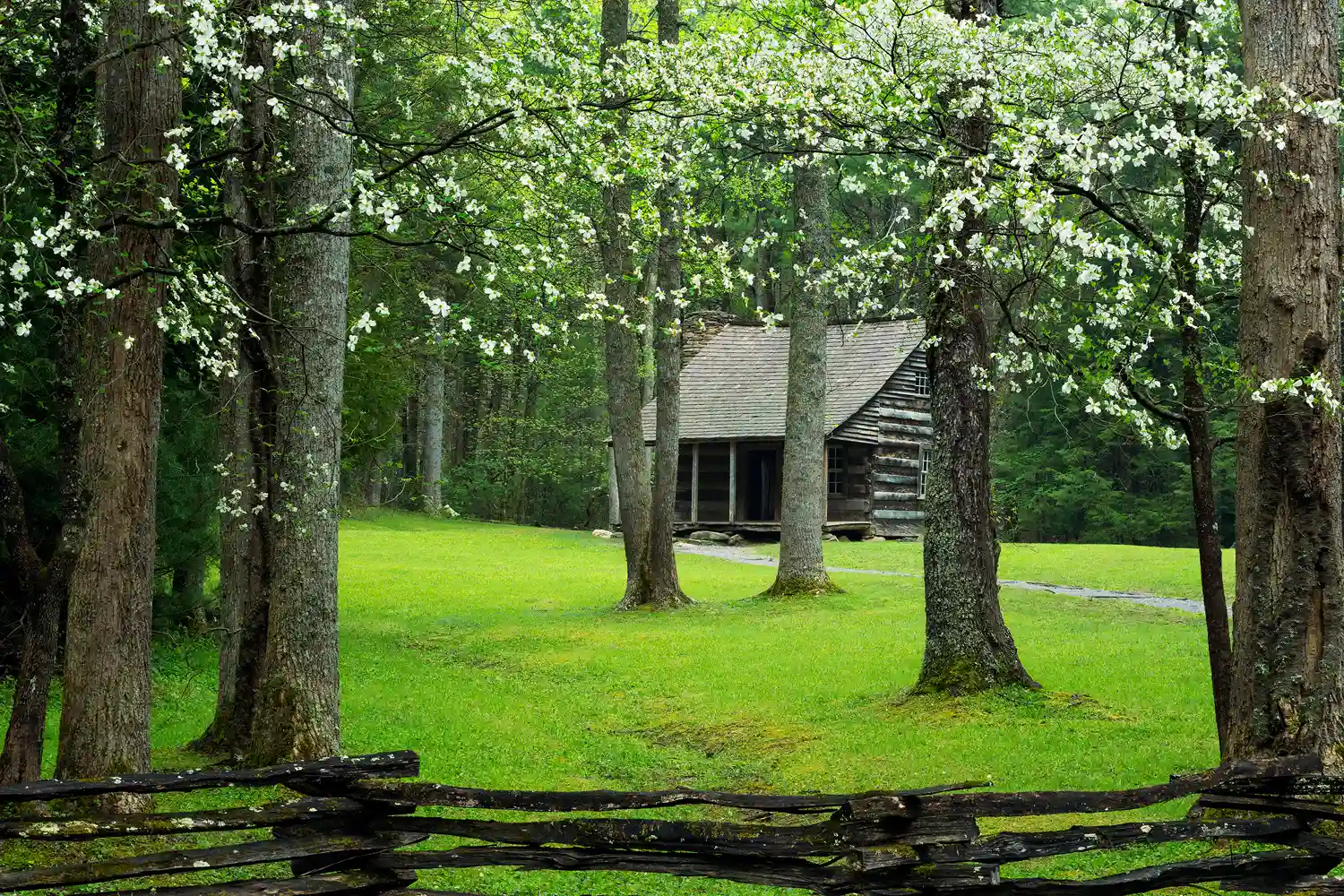
Historic structures occasionally become part of the composition. Cabins such as Carter Shields and Ephraim Bales, along with the Cable Mill in Cades Cove, provide stable visual anchors within the surrounding forest and spring conditions.
Intimate forest scenes
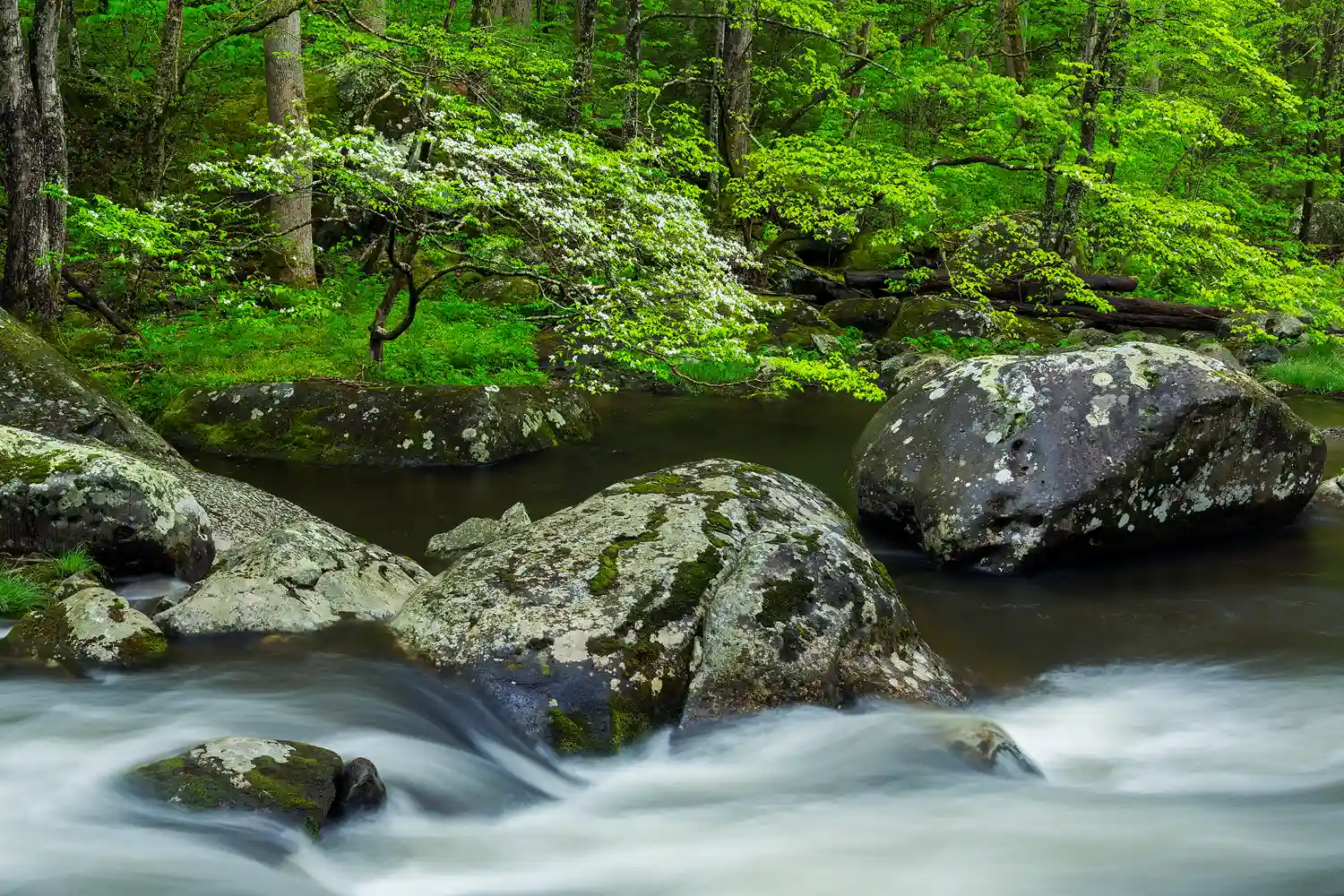
Spring growth creates opportunities beyond larger landscapes. Ferns, mossy rocks, small cascades, and emerging wildflowers reward careful framing in areas such as Tremont, Greenbrier, and the Roaring Fork valley. These quieter scenes often benefit from patient observation and subtle control of light and contrast.
Workshop itinerary and schedule
Overview
-
Workshop start (date TBA)
7:00 PM — Introductions and discussion in the conference room at the first lodging location.
-
Workshop conclusion (date TBA)
The workshop concludes after an evening photography session.
Lodging
Lodging dates will be confirmed once workshop dates are set.
The Parkman8314 State Hwy 73 (Lamar Alexander Pkwy), Townsend, TN 37882
Lodging website · (865) 448-2465 Hampton Inn
967 Parkway, Gatlinburg, TN 37738
Lodging website · 865-436-4878
While we'll visit excellent locations, the Smokies are vast and it's impossible to photograph everything in one workshop. Many participants enjoy staying a few extra days to explore on their own.
We will reserve a block of rooms at each hotel. Once group reservations are available, we will email participants with instructions for selecting rooms.
What to expect
- Morning: Each day begins with soft early light. We stay in the field as the light changes, sometimes relocating before finishing. Early light isn't limited to overlooks and is often used for smaller forest scenes. Afterward, we go for a group breakfast (on Monday this may be lunch).
- Midday: Time to rest and download files. On two days we set aside extra time for post-processing help and image review.
- Evening: After a late-afternoon meal, we return to the field for evening photography. Spring sunsets are around 8:15 PM. On overcast days, we may photograph through the day and skip the evening session.
Registration
Dates for this workshop haven't been announced yet.
Workshop details
- Experience level
- Beginner to advanced. Instruction is adapted to your experience and goals, whether you're building a foundation or refining your approach.
- Group size
- Small group (target of 8 participants).
- Effort
- Easy to moderate. Most photography locations are within about 400 yards of parking, with some light trail hiking. Stream and waterfall locations can involve uneven terrain, including boulders and slick rock, so careful footing is important. Hiking boots are recommended for stability, especially near water.
- Conditions
- Spring can bring wide temperature swings and sudden weather changes. Mornings are often chilly, especially at higher elevations, so layers matter. Being prepared for variable conditions makes it easier to stay comfortable in the field.
- Elevation
- Locations range from about 1,300 to 6,600 feet.
Getting to the workshop
Air travel
The most convenient airport is McGhee Tyson Airport (Knoxville, TN).
Drive times: Knoxville to Townsend is about 45 minutes. Gatlinburg to Knoxville is about 1 hour.
Driving and carpooling
Expect paved highways and some well-maintained dirt roads that may be muddy depending on weather. Carpooling during the workshop is encouraged to reduce impact and simplify logistics.
Recommended gear
Lenses
A useful range is roughly 18mm to 400mm (full-frame equivalent). A polarizer helps with glare and color, and a 6-stop (or stronger) neutral density filter will slow shutter speeds for waterfall and stream work.
Lens hoods
To protect the front lens element from light rain and condensation.
Macro opportunities
Spring brings plenty of close-up subjects. If you enjoy macro, bring a lens that lets you work with wildflowers and small details.
Rain gear and wading
Rain is possible and we do photograph in light rain—bring an umbrella and rainproof clothing. If you plan to wade into streams, waterproof shoes or wading boots are strongly recommended. The water can be cold, but the perspective can be worth it.
Workshop community
FAQ
- What makes spring in the Smokies worth photographing?
-
Spring is when the park feels alive again, with fresh greens, higher water, and a lot of subtle atmosphere. Streams and waterfalls have more energy, forests carry that clean “new” color, and wildflowers begin to appear. It's a good season for photographers who want to work the Smokies with fewer crowds than in autumn.
- Is this workshop mostly waterfalls, or do we photograph a range of subjects?
-
It's a mix. Waterfalls and cascades are a big part of the spring story, but we also work foggy valleys, ridge overlooks, historic structures, and smaller intimate scenes in the forest. The goal is not to shoot one subject all week; it's to make strong photographs in whatever the park is giving us that day.
- How much post-processing instruction is included?
-
Some, but it isn't a large part of the workshop. We build editing help into the schedule on two days, and Andy is always available for questions, review, and guidance. The main emphasis remains on time in the field making photographs.
- What are conditions like in spring—rain, fog, temperature swings?
-
All of the above are possible, sometimes in the same day. Spring mornings can be chilly, and weather can change quickly with elevation. Fog is common and can be excellent for mood and depth. Light rain is something we often work in because it deepens color, adds atmosphere, and keeps contrast under control. We'll avoid heavy rain and high winds for comfort and safety.
- How physically demanding is the workshop?
-
Generally easy to moderate. Most locations are close to parking, but some involve short trail walks. Stream and waterfall locations often require stepping over rocks and navigating slick, uneven ground, so good footing matters more than fitness. If you're comfortable walking carefully on natural terrain and you wear supportive shoes, you should be fine. If you want to wade for certain angles, waterproof shoes or wading boots are a big help.
Further Study
For photographers interested in refining post-processing techniques related to this workshop, the following tutorials may be helpful: