
Great Smoky Mountains National Park Fall Photography Workshop
This Great Smoky Mountains fall photography workshop is based in Gatlinburg during peak autumn color in late October. The Smokies are known for layered ridgelines, dense forests, and valley fog that settles into the mountains during cool autumn mornings. We photograph these landscapes at sunrise and throughout the day, working in a small group where instruction happens in the field as light, weather, and conditions evolve.
Workshop overview

Workshop video
This video shows behind-the-scenes field sessions throughout the park, along with finished images captured as autumn color, fog, light, and river conditions evolved.
About the Smoky Mountains fall photography workshop
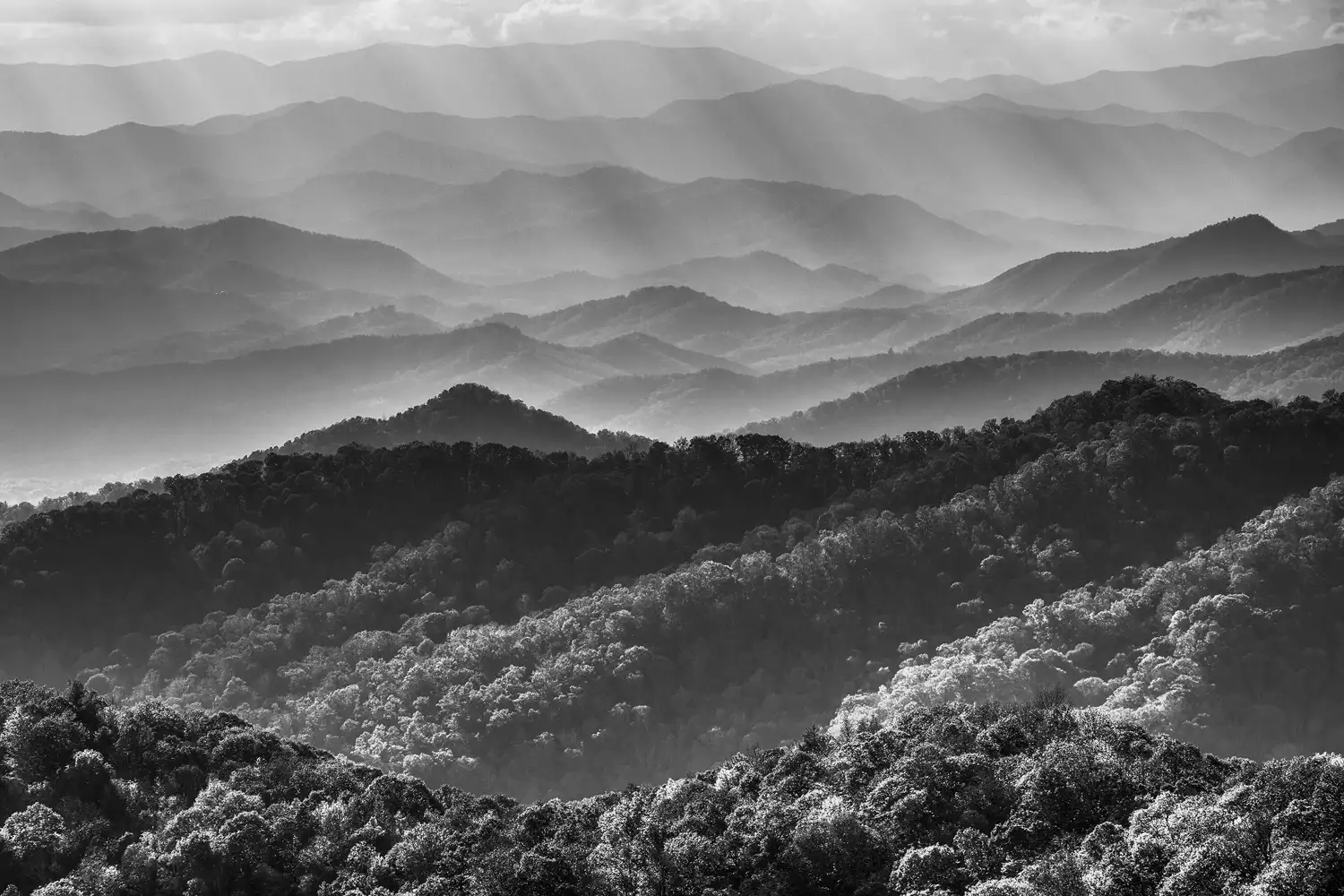
Fall mornings in the Smokies are often quiet and cool, with mist lingering in the valleys as first light begins to separate ridge from ridge. From overlooks like Luftee and the Foothills Parkway, layered mountains stack into the distance while fog settles into the lower elevations. We watch for separation, clear air above and atmosphere below, and for moments when early light reveals structure without overwhelming it. These sunrise sessions set the tone for the workshop: patient, observant, and responsive to what the mountains are actually doing.
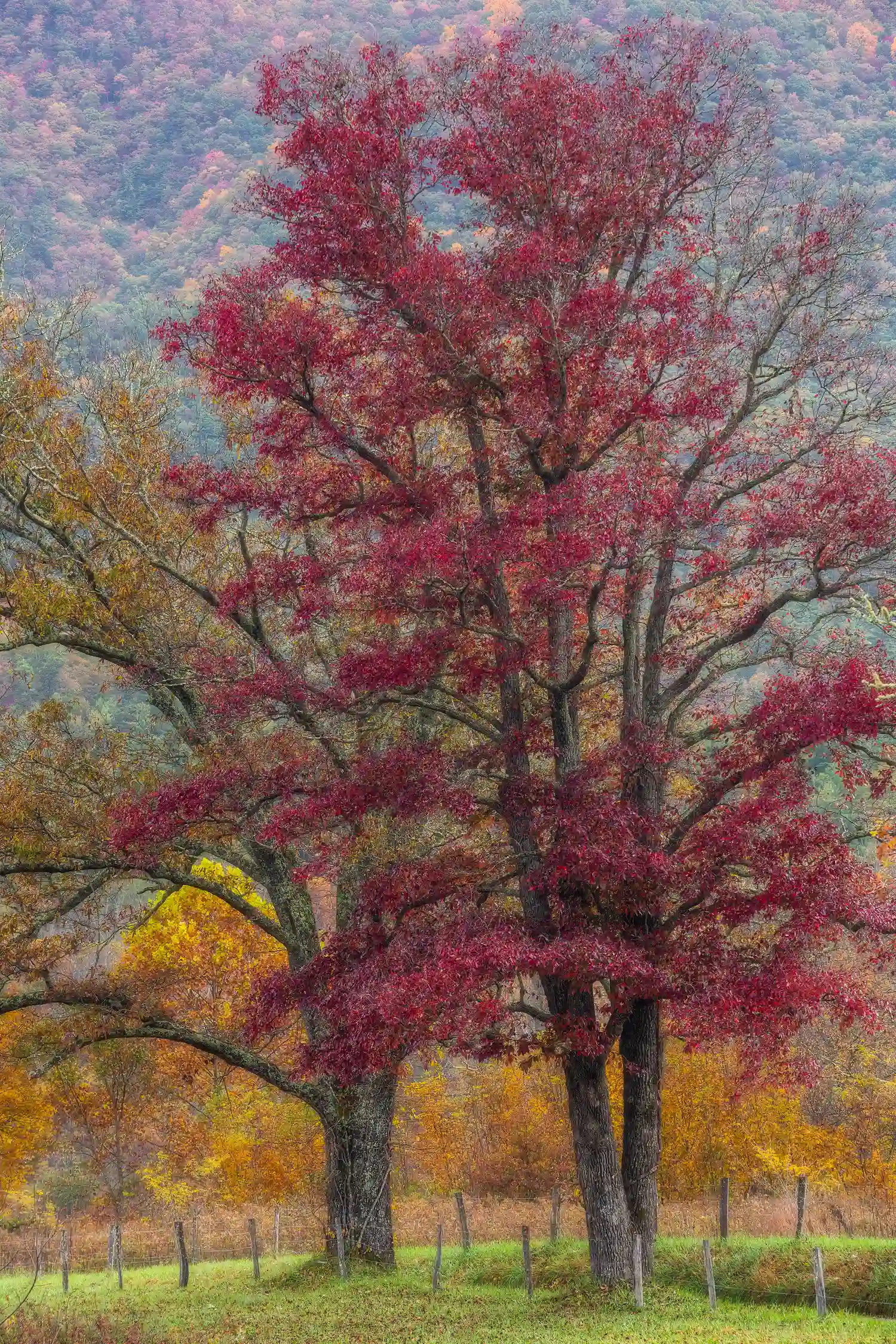
After ridge work, we often move lower. Sparks Lane in Cades Cove becomes a second stop on one morning, where fields, fences, and tree lines simplify the scene. Along Tremont Road and at Big Creek, we spend sessions working the rivers at multiple locations, not just finding compositions but working them until they feel resolved. From one morning to the next, water levels, leaf color, reflected light, and overcast skies can change the balance of a frame. These variables influence how locations photograph throughout the week.
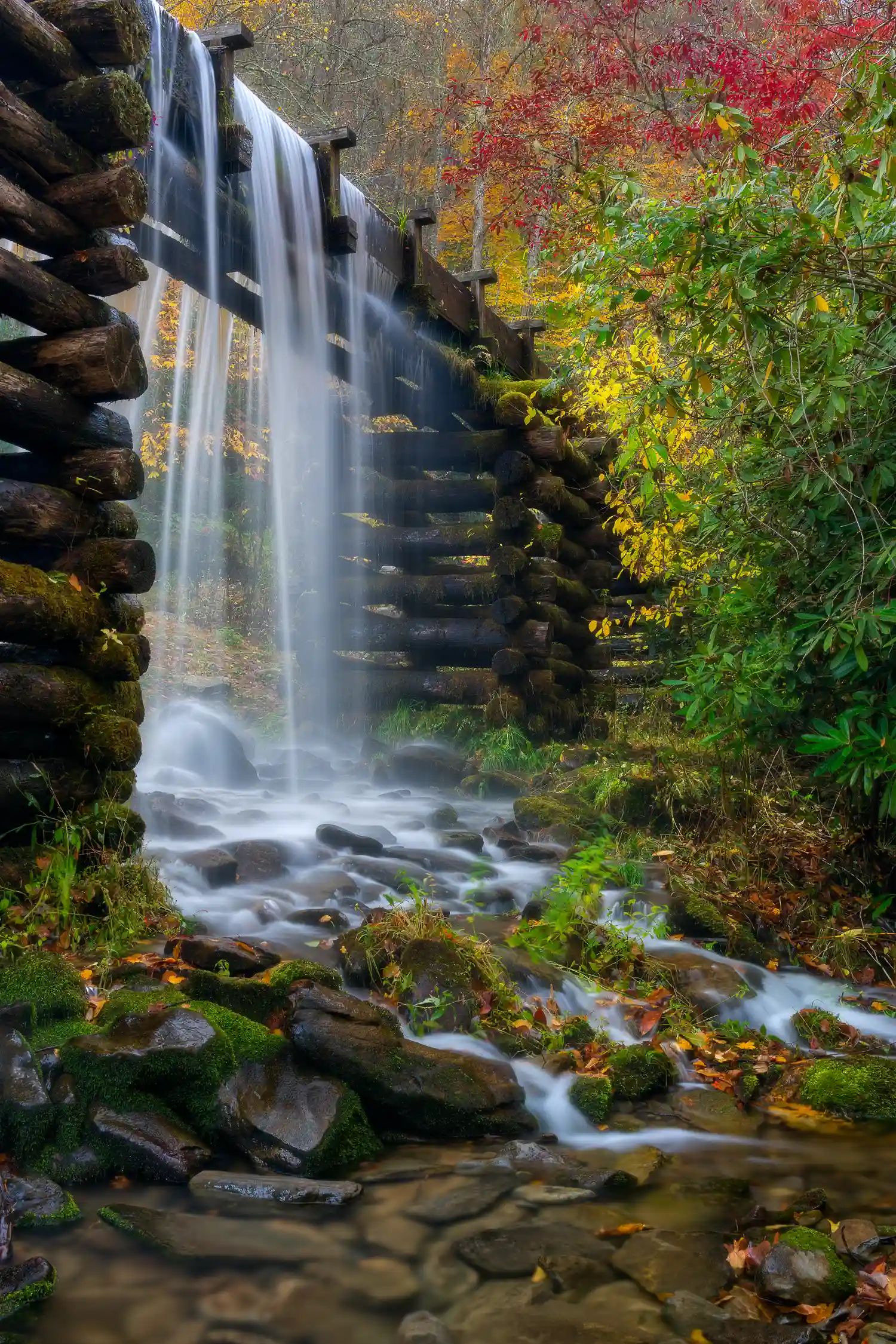
Historic structures and smaller scenes are equally important. Mingus Mill and the cabins along Roaring Fork Road reward early, diffuse light or overcast days and careful framing. At Tom Branch Falls in Deep Creek, we sometimes wait for direct sun to appear in the frame and use small apertures to create sun stars. Different subjects require different conditions, and part of the workshop is learning to recognize which scene is strongest in the moment.
Andy Cook is present in the field throughout the workshop, not to make his own images but to offer guidance where it is useful, whether at the tripod, during setup, or while reviewing a decision that did not quite hold together. Experience levels vary, and participants come for different reasons. Some want to learn the basics of manual camera control and develop compositional decision-making skills. Others come for access and timing, or simply for the environment itself. The goal is the same for everyone: to leave with a body of work that reflects what they intended to capture. You can read more about how instruction works across all workshops on the How We Teach page.
Workshop highlights
Overlooks and layered ridgelines
We begin some mornings at overlooks like Luftee and along the Foothills Parkway, evaluating how layers separate and where the horizon belongs within the frame. These sessions focus on deciding how much foreground to include and recognizing when light creates depth without flattening the scene. When conditions allow, Clingmans Dome may offer an additional high-elevation perspective.
Rivers, waterfalls, and working water
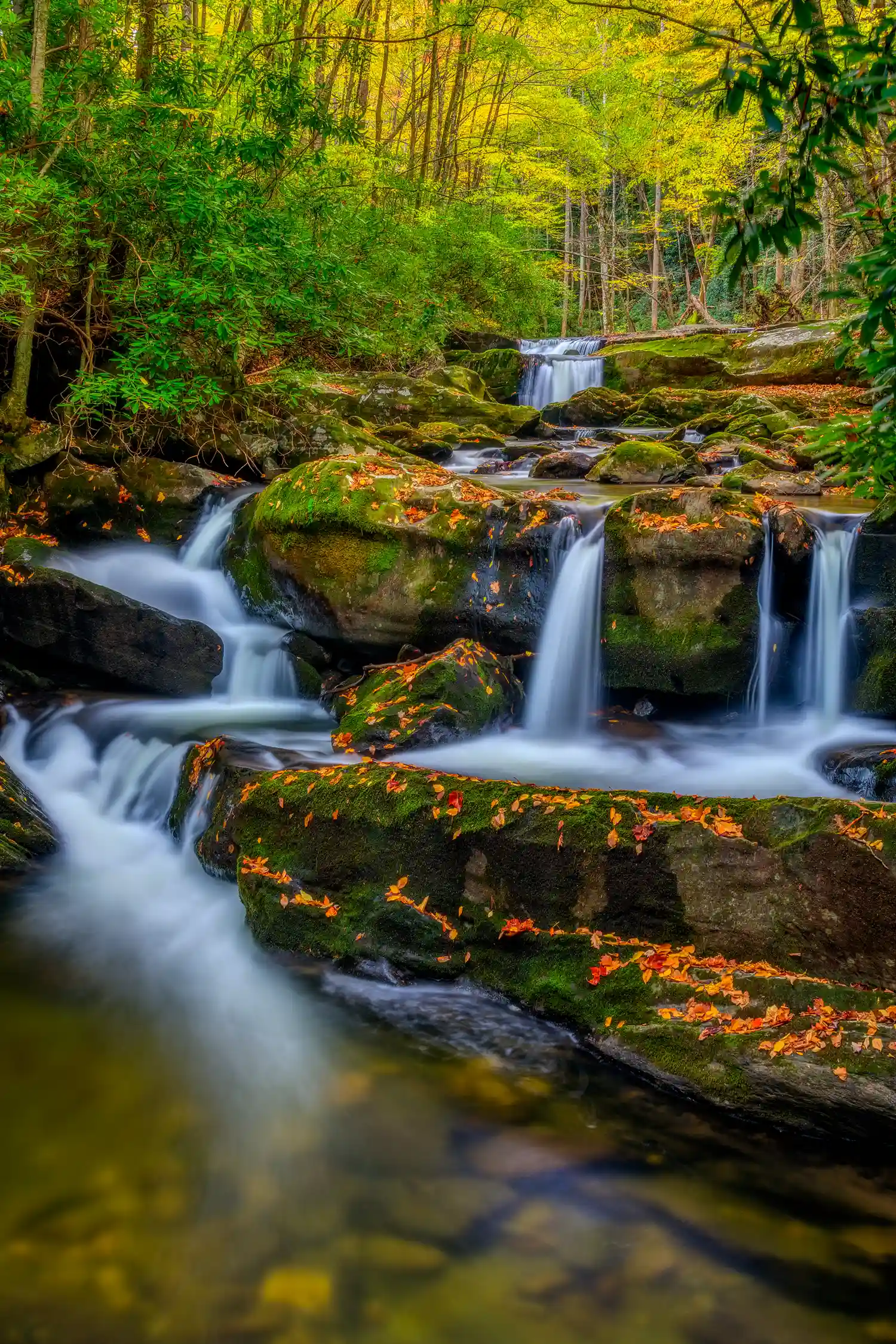
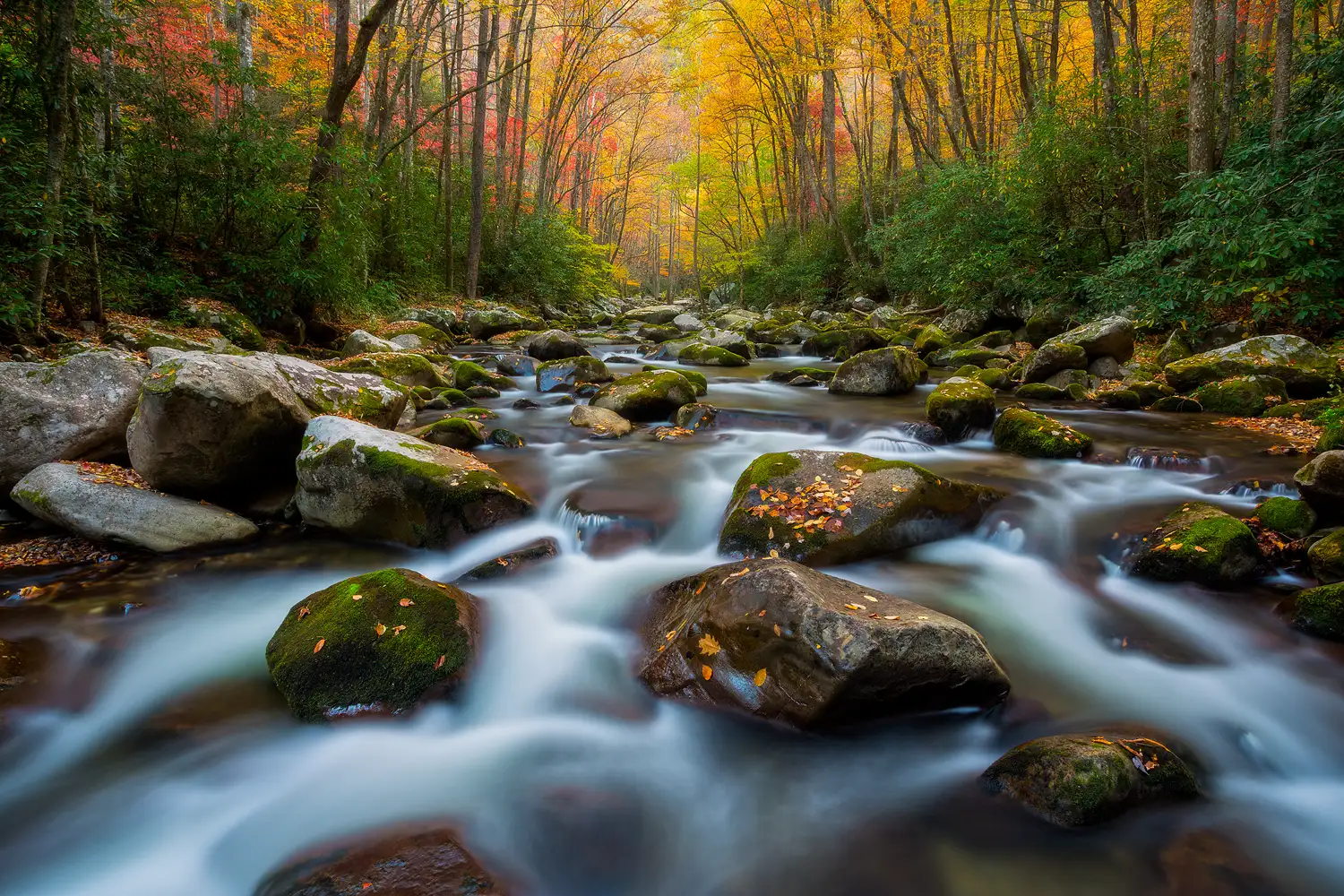
Tremont Road, Deep Creek, and Big Creek give us ample opportunities to work moving water in different conditions. There is so much to explore in the Tremont area that we cannot capture it all in one session, so we return to different sections of river and discover new compositions. At Tom Branch Falls, direct sun and small apertures can be used intentionally to introduce starbursts without overpowering the scene. In the Smokies, white water against dark rock requires careful exposure control, edge awareness, and deliberate subject placement within a busy frame.
Historic structures and quieter scenes
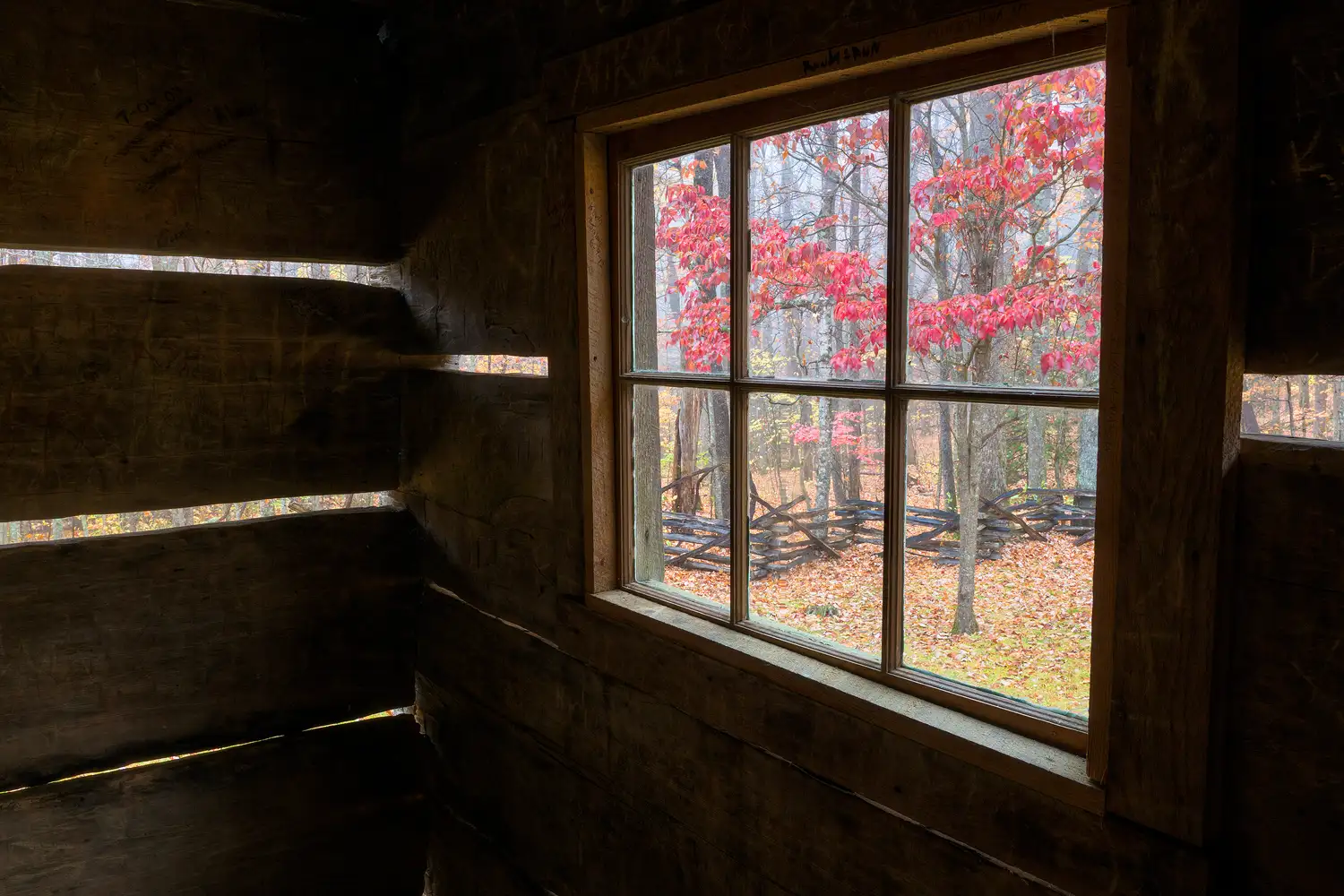
Mingus Mill, Sparks Lane, and the cabins along Roaring Fork Road provide structure within the broader fall landscape. Here the emphasis shifts toward alignment, spacing, and how lines such as fences or tree trunks guide the eye through the frame. Early directional or soft light helps define texture. These scenes reward deliberate framing and thoughtful exposure decisions.
Workshop itinerary and schedule
Lodging
We'll be based in Gatlinburg, close to the park entrances we use most often during fall. The location allows easy access to the park while keeping evenings simple during a busy season. Final booking details and a reservation link will be sent closer to the workshop date.
Hampton Inn967 Parkway, Gatlinburg, TN 37738
Lodging website · 865-436-4878
Daily outline
-
Day 1 (Saturday, Oct. 24)
- — Welcome and orientation.
-
Days 2–5 (Sunday–Wednesday, Oct. 25–28)
Some days emphasize waterfalls and forest scenes; others focus on ridgelines, distance, and compression. Evenings are used selectively. There's no obligation to be out until sunset if we're working in the forest.
-
Day 5 (Wednesday, Oct. 28)
Workshop conclusion: Photography typically runs into the evening. Because late returns are common, participants should plan to stay overnight and depart Thursday morning rather than scheduling late-night travel.

What to expect
- Morning: Most days begin early. We're usually in position before first light, setting up and watching how a scene unfolds. We stay as long as conditions remain productive.
- Midday: What happens next depends on the weather. On overcast or rainy days, we often continue working, as streams, waterfalls, and forest scenes benefit from soft light. On sunnier days, we may step away for a break, image review, or independent time. These pauses are an opportunity to discuss post-processing questions or revisit decisions made earlier in the field.
- Evening: Evenings are planned around available light. When conditions are right, we'll work a sunset location. At other times, we'll be in the forest along streams, waterfalls, and shaded corridors where soft light settles in gradually and remains usable into sunset.
- Dinner and evenings in town: We don't schedule group dinners because returns can be late, often between 7:30 and 8:30 PM, and vary from day to day. Gatlinburg has plenty of dining options within walking distance of the hotel, and most participants choose whatever fits their energy level: eating out, keeping something simple on hand, or reviewing images before turning in.
Registration
Registration details are available on the next page where you'll find secure PayPal buttons. You can check out as a guest using your credit or debit card—no PayPal account required.
→ Register for the 2026 Great Smoky Mountains Fall workshop
→ Join the 2027 Great Smoky Mountains Fall Workshop interest list.
Workshop details
- Experience level
- Experience levels vary. Instruction happens in the field and adjusts to both the conditions and the individual, whether that means help with basic setup or a deeper look at composition and decision-making.
- Group size
- Small group (target of 8 participants) to allow for individualized instruction.
- Effort
- Moderate. Many locations are close to parking, but some involve short hikes on uneven terrain. The longest walks are roughly 1.5 miles each way. Near streams and waterfalls, footing can be rocky, slick, or uneven, and careful movement is important. Sturdy footwear with good traction is strongly recommended.
- Conditions
- Fall weather in the Smokies is variable. Mornings can be quite cold, with milder conditions later in the day. Rain and fog are possible and often productive for photography, especially in forested areas. Layered clothing and rain protection are essential.
- Elevation
- We'll work across a wide range of elevations, from roughly 1,300 feet in the valleys to over 6,000 feet along the ridges. Temperature, wind, and visibility can change noticeably as we move through the park.
Getting to the workshop
Air travel
Knoxville, TN (TYS) is the best airport for this workshop.
Drive time from Knoxville: about 2 hours
The route through Townsend is recommended to avoid heavy traffic through Pigeon Forge and keep the drive time above.
Driving and carpooling
A standard rental car is sufficient for the paved roads and maintained dirt roads. During the workshop we encourage participants to carpool when possible to reduce our impact and create a sense of community.
Recommended gear
Lenses
Bring lenses covering a wide focal range—from at least 18mm to 400mm (after considering the lens multiplication factor). This versatility ensures you're ready for sweeping landscapes and detailed close-ups.
Polarizing filter
Enhance color saturation and reduce reflections. A polarizer can be helpful for photographing fall foliage and is often necessary for capturing stream scenes.
Neutral density (ND) filter
Opt for a 6-stop or higher ND filter. It allows longer exposures that smooth the movement of water when conditions are bright. On overcast days, it may not be needed.
Rain gear
Be prepared for wet weather. Pack waterproof clothing and an umbrella.
Footwear
For working near shallow, cold streams, sturdy waterproof boots are strongly recommended. Footwear suitable for wading can open up additional positions for those comfortable working in cold water.
Workshop community

See photographs created by participants during past Great Smoky Mountains fall workshops.
FAQ
- Is this workshop suitable for beginners?
-
Yes. Beginners are welcome. Guidance happens in the field, in real conditions, not in a classroom setting. If you're newer, we focus on fundamentals like camera settings, exposure, tripod use, filters, and composing in layered or busy scenes. If you're more experienced, the emphasis shifts toward refinement, cleaner edges, stronger structure, and better subject arrangement decisions.
- How much hiking is involved?
-
Most locations require short walks from parking areas. Big Creek involves moderate hiking on established trails, and we move at a practical pace with time to work scenes carefully. You do not need to be an endurance athlete, but you should be comfortable carrying your gear on uneven terrain for stretches at a time.
- What happens if the fog doesn't show up?
-
Fog can be excellent in the Smokies, but it is not guaranteed. If ridge conditions are not working, we shift to rivers, waterfalls, historic structures, or forest scenes that photograph well in soft or overcast light. The workshop is built around adjusting subjects to match conditions rather than waiting for one specific look.
- How do you handle crowds during fall color season?
-
Fall is popular in the Smokies, especially at overlooks. We start early, before peak visitation, and we work secondary locations like Sparks Lane or river sections where there is more room to spread out. Evening sessions take place after peak daytime traffic and often in less visited areas of the park.
- Is there time for image review and post-processing discussion?
-
Yes. Midday breaks and downtime are often used for image review and informal editing discussions. We talk through what worked, what did not, and how small changes in framing or timing can strengthen an image. Post-processing guidance is available and works best when it stays connected to what you have been photographing in the field.
Further Study
For photographers interested in refining post-processing techniques related to this workshop, the following tutorials may be helpful: