
Grand Teton National Park Photography Workshop
This Grand Teton National Park photography workshop is based at the cabins in Coulter Bay during late spring. The Tetons rise sharply above broad river valleys, alpine lakes, and historic ranchlands, creating one of the most recognizable mountain landscapes in North America. We photograph these landscapes in a small group, working carefully in the field as light and mountain conditions evolve.
Workshop overview
Workshop video
This video shows behind-the-scenes field sessions at locations such as Schwabacher Landing, Mormon Row, and along Jackson Lake, along with finished images made as light and conditions evolved during past June workshops.
About the Grand Teton National Park photography workshop
Grand Teton National Park is a place where landscape photography appears straightforward at first glance, but the decisions are rarely simple. The mountains are massive, the light shifts quickly, and the difference between a postcard image and a photograph you are proud of often comes down to small choices: where you stand, how you place the horizon, how you handle a bright snowfield, and whether focus is truly where you intended. This workshop gives those decisions the attention they deserve.
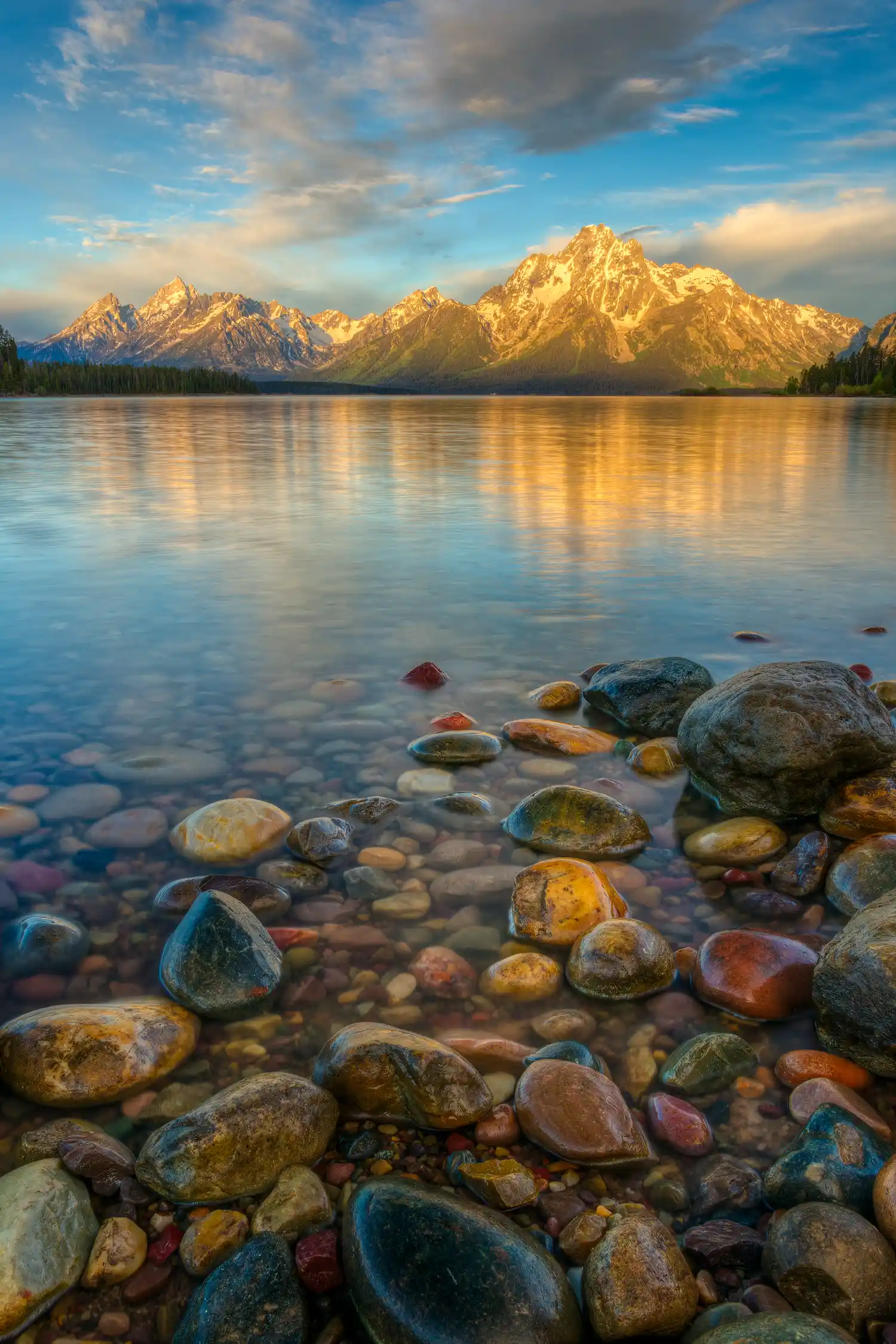
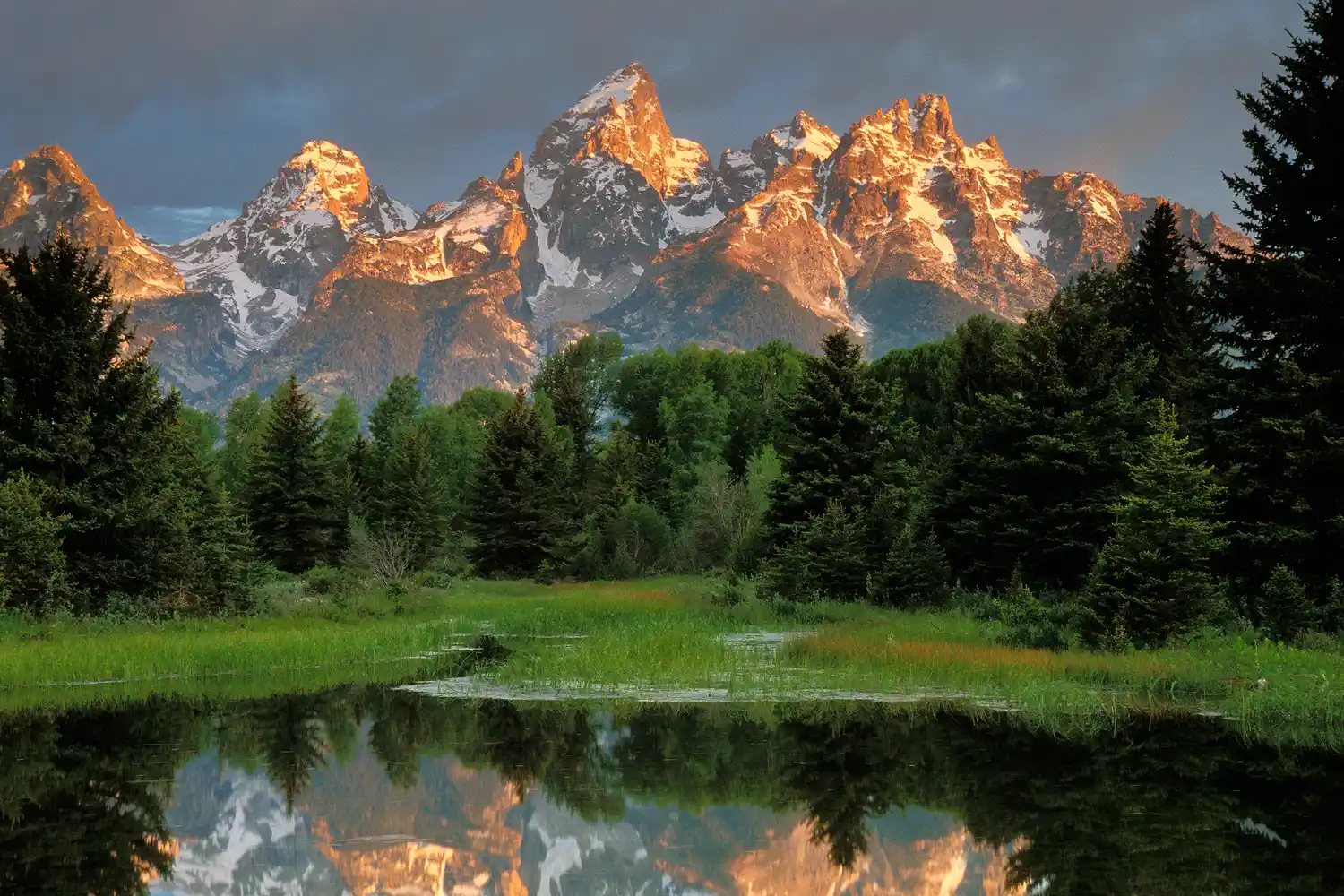
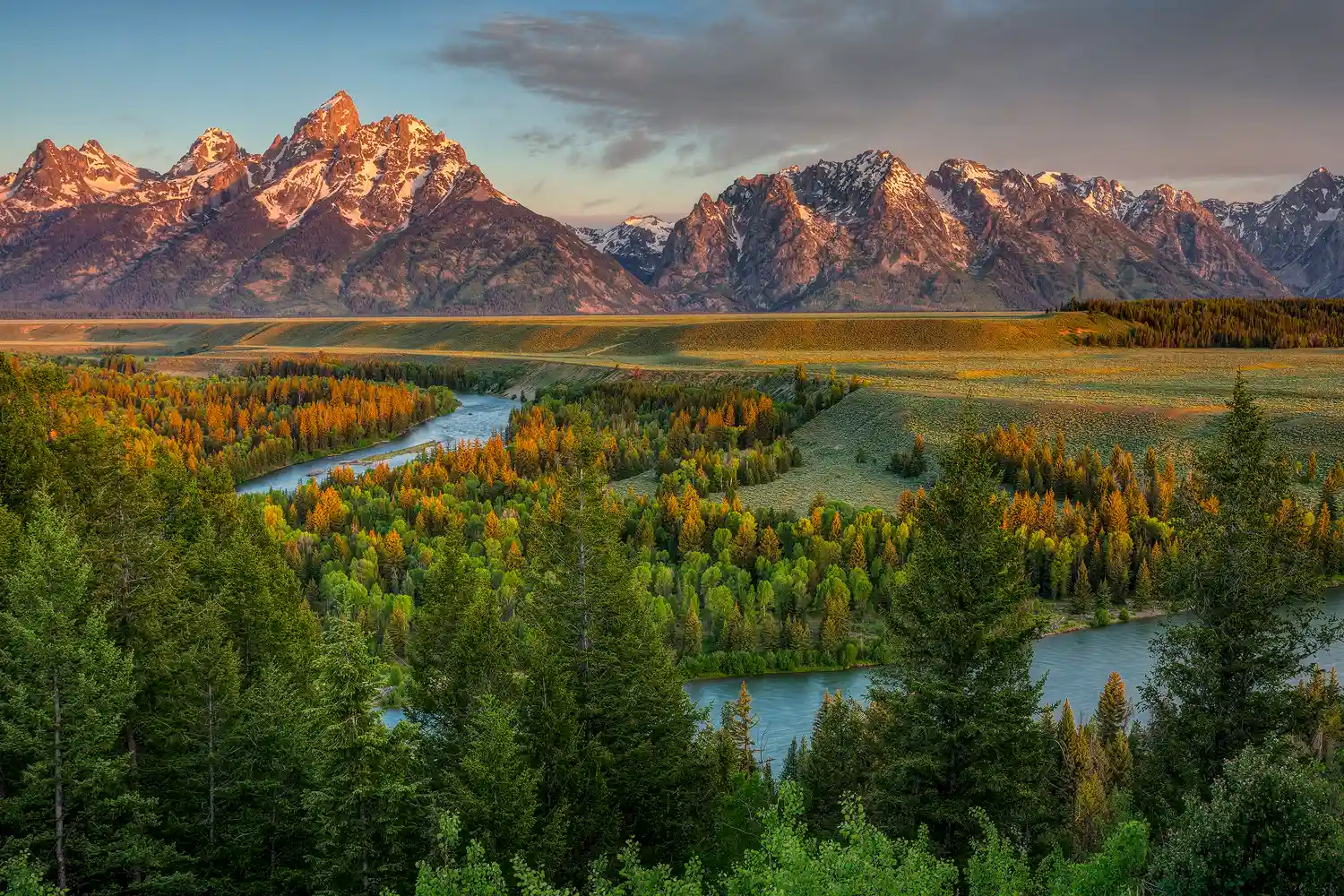
In June, first light often reaches the peaks before it touches the valley floor. We approach the Tetons with early starts, deliberate setups, and time to watch conditions unfold, whether along the Snake River at Schwabacher Landing or looking toward Mount Moran from Jackson Lake. Snow, water, and reflective surfaces require careful exposure control and compositional balance. We work through managing dynamic range in high-contrast scenes, deciding when bracketing makes sense, when a panorama better matches the scale of what you're seeing, and how small shifts in position affect the relationship between foreground and peak. Newer photographers build a solid foundation through focus technique and exposure management, while more experienced photographers concentrate on the details that separate a pleasant image from a strong one, including clean edges, visual flow, and knowing when simplification is more powerful than added drama.
Andy works alongside participants in the field, not to make his own photographs but to help with decisions as conditions unfold. Experience levels vary, and participants come for different reasons. Some want to strengthen technical control in a high-contrast mountain environment. Others come for access, timing, and the opportunity to work carefully in one of the most recognizable landscapes in the country. The goal is the same for everyone: to leave with a body of work that reflects what they intended to capture. You can read more about how instruction works across all workshops on the How We Teach page.
Workshop highlights
Spring landscapes
Landscapes in the Tetons often contain multiple visual elements within a single frame, including bright peaks, dark forests, reflective water, and textured foregrounds. These scenes require deliberate decisions about exposure, framing, and visual priority. We spend time evaluating how elements relate to one another, what detail matters most, and how to keep the composition cohesive.
Historic structures
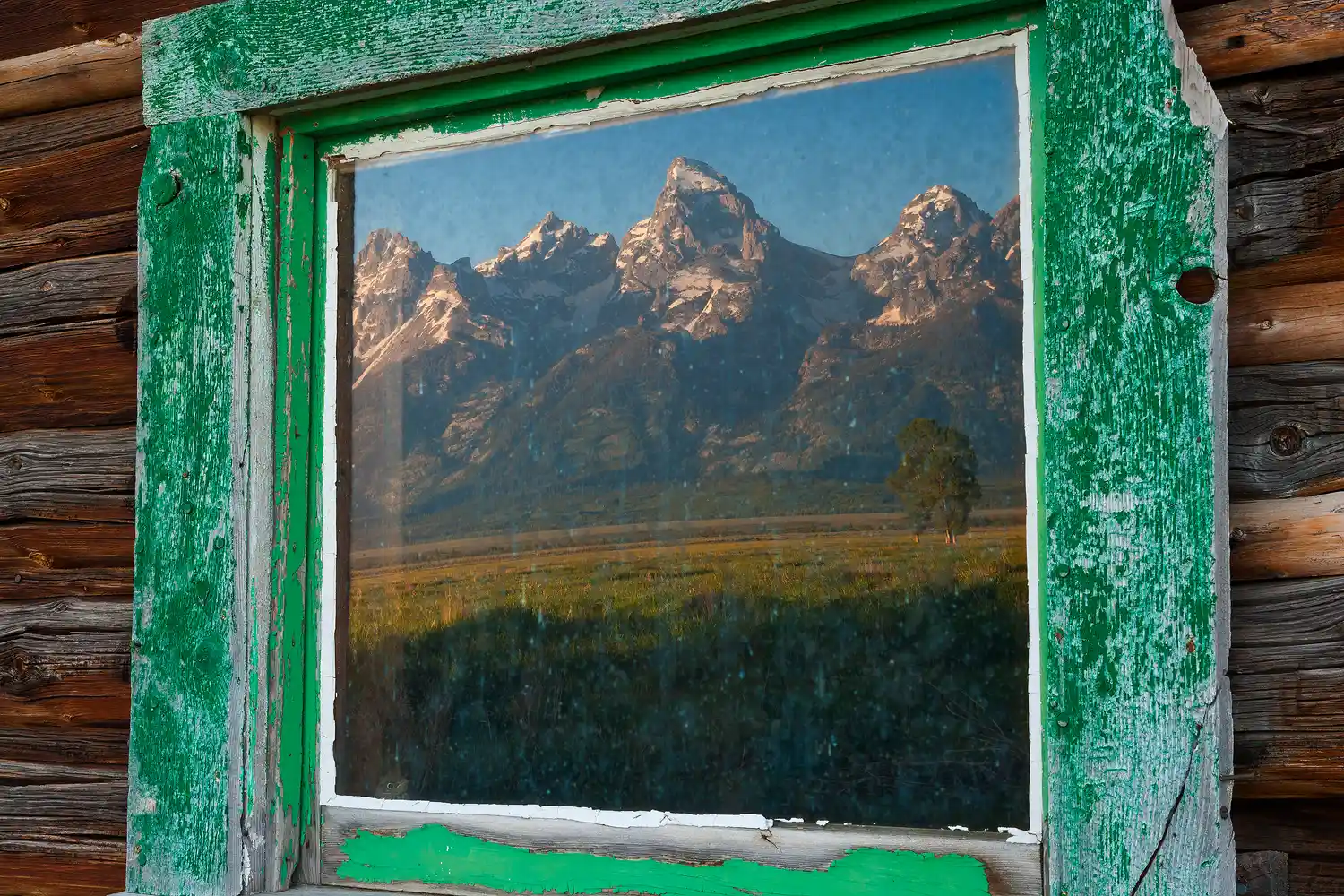
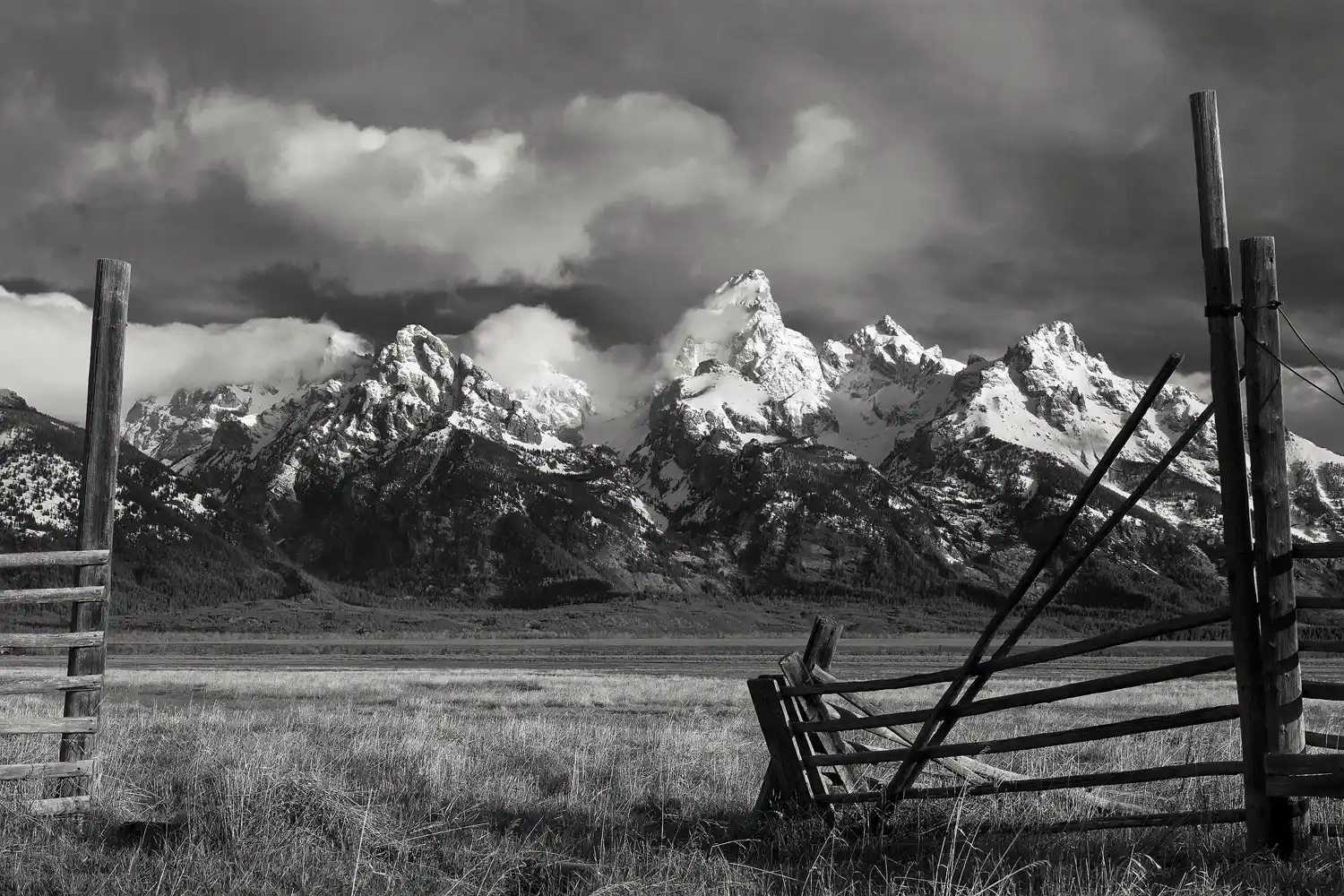
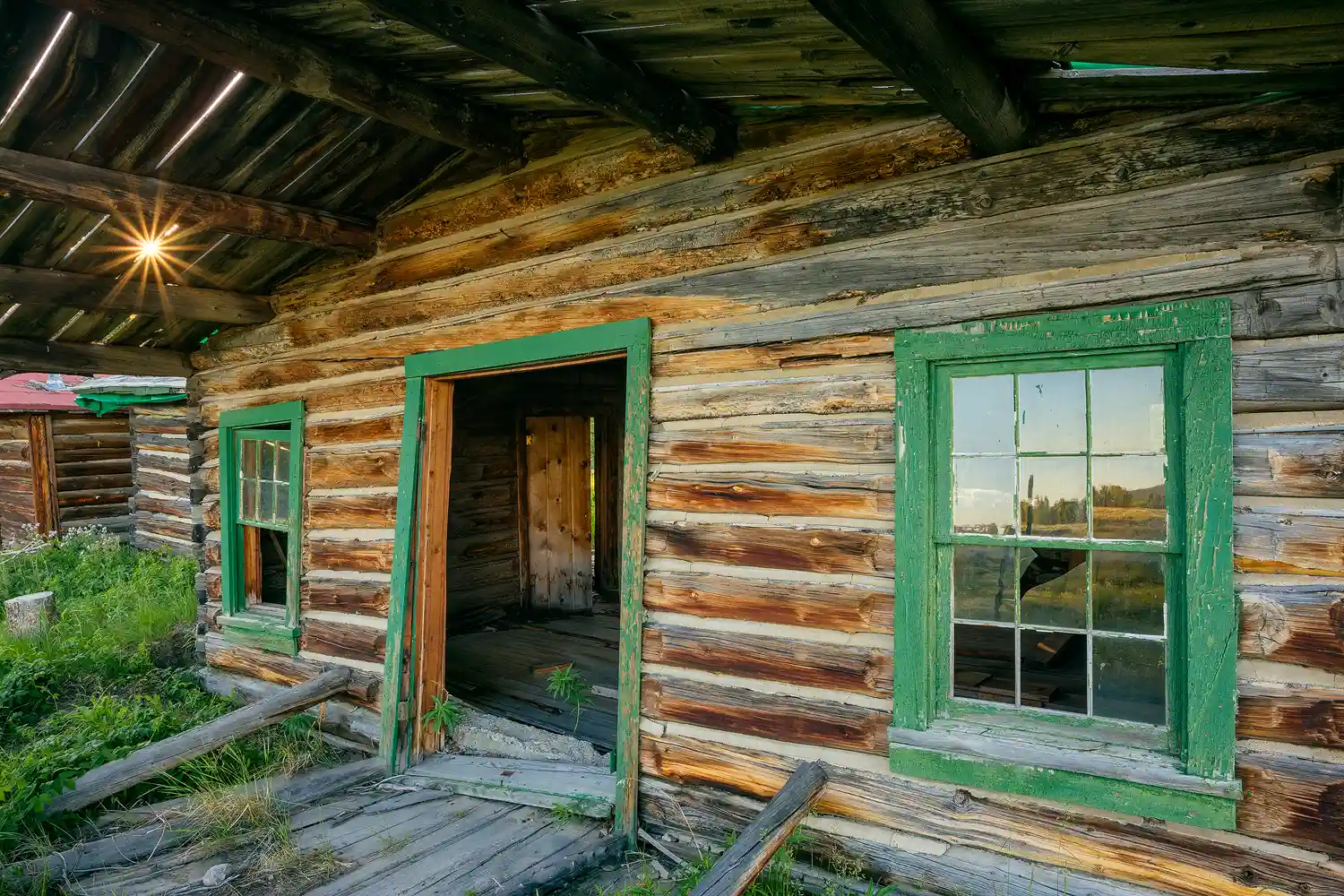
The barns on Mormon Row are more than subjects. They anchor the range and provide scale within the landscape. These scenes require careful choices about focal length, viewpoint, fence lines, and eliminating small distractions before pressing the shutter.
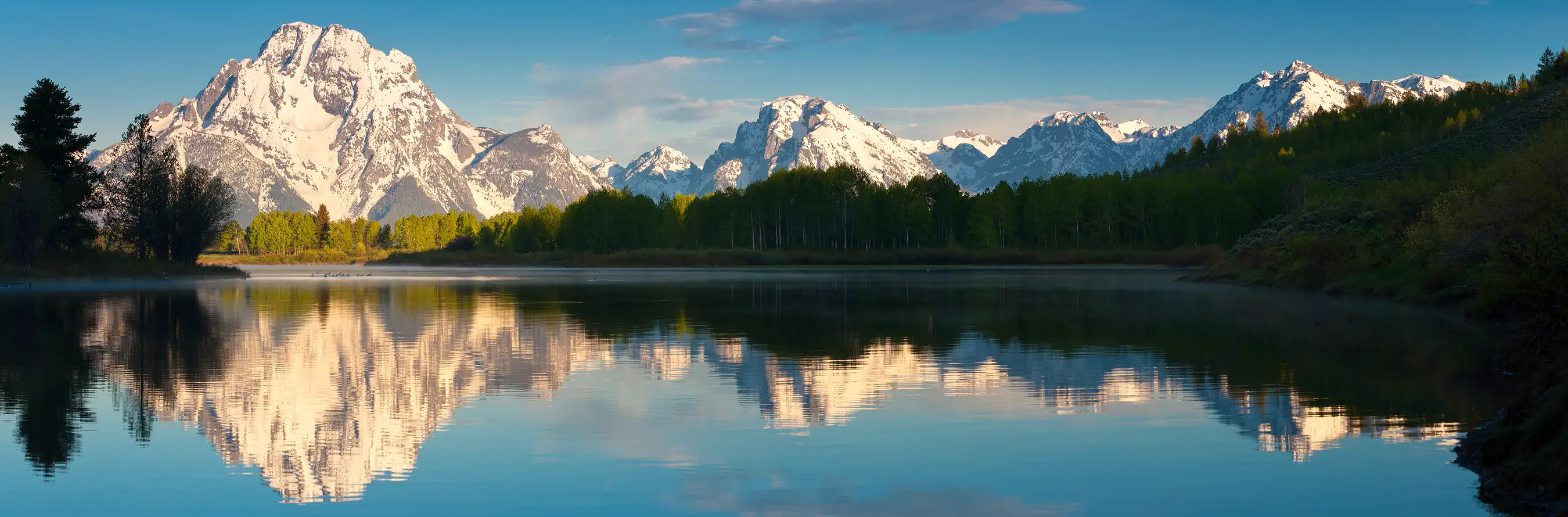
Mountain reflections
Reflections in the Tetons, especially at places like Oxbow Bend, can be extraordinary. We talk through when symmetry strengthens a frame and when it weakens it, and how to position yourself so reflections support the scene rather than dominate it. If conditions are not cooperating, we adjust the composition so the photograph is not dependent on a perfect mirror.
Wildlife opportunities
This is a landscape workshop first, but wildlife encounters are always possible. When respectful opportunities arise, Andy will help you respond quickly and calmly: stabilizing, choosing shutter speed, and keeping settings simple under pressure. No chasing. No crowd behavior. Just readiness when the park offers a moment.
Why June is ideal in the Tetons
Snow-capped peaks and lush valleys
June often delivers the Tetons in a best-of-both-worlds season: winter texture up high and spring color down low. Snow gives the range definition and graphic shape, while valley greens keep the scene from going monochrome. Early light and calm mornings frequently align in June, producing clean detail in the peaks and stable reflections along rivers and lakes.
Workshop itinerary and schedule
Lodging
Colter Bay VillageGrand Teton National Park, Moran, WY 83013
Lodging website · 307-543-3100
Daily outline
-
Day 1 (Wednesday, June 13)
- — Arrive and check in.
- — Welcome meeting and introductions.
-
Days 2–5 (Thursday–Sunday, June 14–17)
Field sessions focused on Grand Teton landscapes, locations, light, and composition, plus individualized post-processing guidance using your own images.
-
Day 6 (Monday, June 18)
Final morning session: workshop concludes after a sunrise shoot (typically wraps between 6:00–7:00 AM). Please avoid scheduling early flights.
What to expect
A typical day
Days in the Tetons revolve around light, not the clock. We shape the schedule around sunrise conditions and weather.
- Morning: We're on location before civil twilight, with time to settle in, evaluate the scene, and make thoughtful decisions as the light builds. On mornings when conditions support it, we may work a second nearby location before breakfast.
- Midday: This is time for rest, image review, and discussion, along with Photoshop sessions for those who bring a laptop. It's where field experiences start to connect, and small adjustments begin to make a noticeable difference.
- Evening: Evenings remain flexible. We review forecasts, decide whether sunset conditions are worth pursuing, and balance shooting with rest. Some evenings we head back out; others we conserve energy for the next morning.
Skills and Workflow
Many photographers can create a strong image occasionally but struggle to repeat it consistently. This workshop focuses on improving that consistency through clearer decision-making in the field.
We work through focus strategy, depth-of-field control, managing dynamic range, shooting panoramas, and understanding when bracketing or a change in position actually improves the result.
Midday sessions connect field decisions to post-processing. Image review and Photoshop discussions help ensure that choices made on location translate cleanly into finished photographs.
Note: Dramatic sunsets can happen, but they're never guaranteed. The schedule stays flexible so we can respond to real conditions instead of forcing a plan that doesn't fit the light.

Registration
Registration details are available on the next page where you'll find secure PayPal buttons. You can check out as a guest using your credit or debit card—no PayPal account required.
Workshop details
- Experience level
- Suitable for developing to advanced photographers.
- Group size
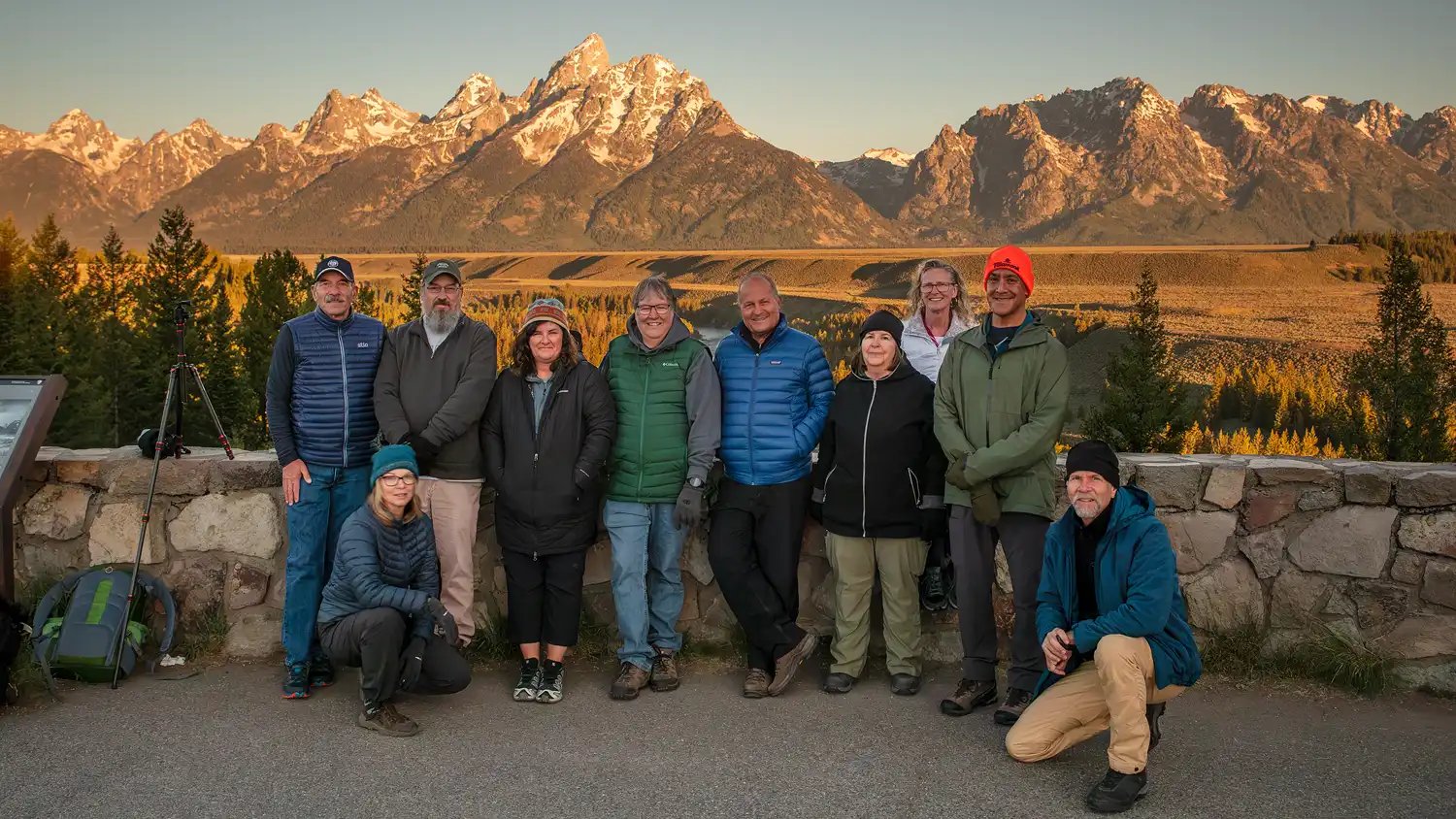
- Target of 8 participants. Small groups, shared meals, early mornings, and honest conversations create a relaxed, supportive environment where learning happens naturally.
- Effort
- Easy — most locations are a short walk from parking; uneven terrain in places.
- Conditions and elevation
- Mornings can be very cold. Shooting locations range from about 6,000 to 8,000 ft — hydrate and pace yourself.
Getting to the workshop
Air travel
Most people flying to this workshop use Jackson, WY or Salt Lake City, UT.
Drive time from Salt Lake City: ~4 hr 45 min
Driving and carpooling
Roads are mainly paved. During the workshop we encourage participants to carpool to reduce impact and build community. A standard rental car is sufficient. Photo locations are spread across the park, so expect a moderate amount of driving.
Recommended gear
Lenses
For landscape photography, a range equivalent to roughly 16mm to 200mm is recommended. For wildlife opportunities, 300mm+ is ideal.
Polarizing filter
A polarizer reduces glare on water and wet surfaces, improves color saturation, and can reduce haze—especially helpful for spring greens and skies.
Workshop community
See photographs created by participants during past Grand Teton workshops.
FAQ
- Is this workshop suitable for beginners?
-
Yes. The workshop supports a wide range of experience levels. If you're newer to landscape photography, we focus on building a strong foundation in focus technique, exposure control, and composition that holds together in real conditions. More experienced photographers concentrate on refining decision-making and simplifying complex scenes. Instruction adapts to where you are.
- How much image review and post-processing instruction is included?
-
Image review and post-processing are built into the schedule. Midday sessions are used to review participant images and discuss editing approaches. The emphasis is on understanding how field decisions carry through into the finished photograph.
- Do I need to know Photoshop before attending?
-
No. Prior experience is not required. If you're new to post-processing, Andy will help you at your own pace during one-on-one sessions. If you're more experienced, he can dive deeper into advanced techniques or help with specific questions using your own images. Post-processing assistance is individualized and always optional.
- How much one-on-one instruction will I receive?
-
This is a small-group workshop, which allows for regular individual feedback. Guidance happens in real time while working on location and during review sessions. You'll have opportunities to ask questions, adjust compositions, and troubleshoot technical challenges throughout the week.
- What does a typical day look like?
-
Days are structured around light. We're usually on location before sunrise and work through changing conditions as the light builds. Midday is used for rest, review, and optional post-processing sessions. Evenings remain flexible, some nights we pursue sunset, others we conserve energy for the next morning.
- Is this workshop more about shooting or learning?
-
Both. You'll spend substantial time photographing iconic locations while also receiving practical guidance. Some participants come primarily for access and timing, others for deeper feedback. The pace allows room for both independent work and conversation when needed.
Further Study
For photographers interested in refining post-processing techniques related to this workshop, the following tutorials may be helpful: